A good look at where our national priorities are right now....
http://www.americanprogress.org/issues/2011/02/tax_breaks_infographic.html
Thursday, March 31, 2011

Saturday, March 19, 2011
Cortisol Detox
After finishing with my midterms, it was time for a break. After my last class on Thursday, I ran into some friends on the president's lawn (the big hill in the center of the Tufts campus) and we just sat for a good half hour, not doing much of anything, listening to the awesome rhythms of BEATS, Tufts drumming collective, who bang out tunes on everything from real drums to garbage cans.
That night, we had a wonderful St. Patrick's Day Dinner party, including very very green pancakes.
And yesterday, ahhhh just one of those wonderful wonderful days.
After work, I biked downtown to the Museum of Fine Arts, in the gorgeous warm weather. (although eerie from a climate change perspective.) As much as I love Tufts, its so good to get away and have a little perspective, seeing other people that make up the fabric of the city. Everyone was dying to get outside after the winter: it always amuses me how much less lame of a place Boston is in the summer. After that, I went with my housemate for a free wine tasting which was quite lovely. And then we went home and cooked an impromtu middle east inspired dinner, before a late night soccer game on the quad.
These are the days when you realize why people describe college as the best time of their lives.
That night, we had a wonderful St. Patrick's Day Dinner party, including very very green pancakes.
And yesterday, ahhhh just one of those wonderful wonderful days.
After work, I biked downtown to the Museum of Fine Arts, in the gorgeous warm weather. (although eerie from a climate change perspective.) As much as I love Tufts, its so good to get away and have a little perspective, seeing other people that make up the fabric of the city. Everyone was dying to get outside after the winter: it always amuses me how much less lame of a place Boston is in the summer. After that, I went with my housemate for a free wine tasting which was quite lovely. And then we went home and cooked an impromtu middle east inspired dinner, before a late night soccer game on the quad.
These are the days when you realize why people describe college as the best time of their lives.
FUERAAAAAA DE AQUI
Going home for spring break! Excited to chill with the fam for a bit. Had this song in my head lately. It's actually about abuse BUT it has a really catchy refrain: Fuera de aqui (Get out of here) which is why I am adopting it as the official start of spring break song.
Wednesday, March 16, 2011
Tuesday, March 15, 2011
Friday, March 11, 2011
Internship Search
I am having a hard time with my search for internships during the summer. I really want to have an interesting chance to gain more experience...along with every other undergrad in the country. And typically for me, I can think of about 25 different subject areas off the top of my head that I would be interested in working with. I'm a little upset because I just found out yesterday that one option I had been thinking about, working with a coffee cooperative BUILD partners with, is not going to be possible because they are having a very unusual year due to the extremely high global coffee prices. See a really interesting New York Times article on the subject. http://www.nytimes.com/2011/03/10/science/earth/10coffee.html (Proof that Tufts kids are totally coffee fiends: at least 5 separate people I know have brought up this article in conversation recently)
Anyway, this means that for now I am trying to apply for more competitive things. Which I don't like. Because I lost all my competitiveness last semester when I had to assimilate to a society that values solidarity and group work. I jest. Basically though, I dislike this because it seems like a waste of time to apply to internships with basic description that sound like:
"Seeking dedicated unpaid labor to do office work most of the time, although there's a chance you may get a chance to do something cool for a bit. Maybe. I mean you'll be working for us for 50 hours a week so.....By the way, we did mention we can't pay you anything whatsoever, right? And good luck finding a cheap apartment round here. To apply for this amazing opportunity, send us 2 copies of your resumé, some other form, an official transcript, a 5 page writing sample (like we'll read it), 3 references, a cover letter, blood samples. Preference will be given to applicants who are willing offer us their firstborn child."
After being frustrated by the fact that I am about as likely to get any of those as I was to get into an Ivy, I ran some internet searches on some other ideas. Mining policy came to mind. Until I googled mining activism and found that the first 3 pages of results were people who had been assassinated. Not very reassuring. Probably any career that hypothetically sounds really cool has a pretty high death rate associated with it. Not bueno.
I should stop complaining though, I am lucky enough to have a world class education and will no doubt find something worth while to do with it.
In the meanwhile, I am keeping calm by drinking lots of tea, because I am getting sick because Tufts is currently a germ infested hole, no doubt caused by midterms concentrating everyone in the library without much ventilation. I went to Buddhist mediation at the Greater Boston Buddhist Community Center today which was pretty cool too, except we didn't actually meditate much, just listened to a buddhist nun talk about certain ideas for practice. And I am listening to this awesome mellow Chilean guitarist chap, Manuel Garcia, over and over and over.
http://youtu.be/mS5ODsIlWqI
Just staying calm and trying to get things done, because there is just nothing else that I can do, except try and control my destiny to the best of my ability.
One more tidbit: If you are in Buddhist temple, it is generally considered disrespectful to point/ stretch out your feet directly towards the Buddha statue representations. Oops. At least I know now.
Anyway, this means that for now I am trying to apply for more competitive things. Which I don't like. Because I lost all my competitiveness last semester when I had to assimilate to a society that values solidarity and group work. I jest. Basically though, I dislike this because it seems like a waste of time to apply to internships with basic description that sound like:
"Seeking dedicated unpaid labor to do office work most of the time, although there's a chance you may get a chance to do something cool for a bit. Maybe. I mean you'll be working for us for 50 hours a week so.....By the way, we did mention we can't pay you anything whatsoever, right? And good luck finding a cheap apartment round here. To apply for this amazing opportunity, send us 2 copies of your resumé, some other form, an official transcript, a 5 page writing sample (like we'll read it), 3 references, a cover letter, blood samples. Preference will be given to applicants who are willing offer us their firstborn child."
After being frustrated by the fact that I am about as likely to get any of those as I was to get into an Ivy, I ran some internet searches on some other ideas. Mining policy came to mind. Until I googled mining activism and found that the first 3 pages of results were people who had been assassinated. Not very reassuring. Probably any career that hypothetically sounds really cool has a pretty high death rate associated with it. Not bueno.
I should stop complaining though, I am lucky enough to have a world class education and will no doubt find something worth while to do with it.
In the meanwhile, I am keeping calm by drinking lots of tea, because I am getting sick because Tufts is currently a germ infested hole, no doubt caused by midterms concentrating everyone in the library without much ventilation. I went to Buddhist mediation at the Greater Boston Buddhist Community Center today which was pretty cool too, except we didn't actually meditate much, just listened to a buddhist nun talk about certain ideas for practice. And I am listening to this awesome mellow Chilean guitarist chap, Manuel Garcia, over and over and over.
http://youtu.be/mS5ODsIlWqI
Just staying calm and trying to get things done, because there is just nothing else that I can do, except try and control my destiny to the best of my ability.
One more tidbit: If you are in Buddhist temple, it is generally considered disrespectful to point/ stretch out your feet directly towards the Buddha statue representations. Oops. At least I know now.
Tuesday, March 8, 2011
Translating...Or not.
While trying in vain to find something in Spanish that hasn't been translated into English for a final project, I came across this interesting article. Words are so great. yeah. Ok, back to finding something global scholarship has neglected to render bilingually.
http://matadornetwork.com/abroad/20-awesomely-untranslatable-words-from-around-the-world/
http://matadornetwork.com/abroad/20-awesomely-untranslatable-words-from-around-the-world/
Una noche, una noche toda llena de murmullos, de perfumes y de músicas de alas
Nighttime is fast becoming my favorite time of day.
I read somewhere once that in the middle ages (or some time long ago and far removed) that people used to sleep in two shifts, waking up midway through the night to get up, walk around, even socialize. According to Ingrid from my internship in Chile, the Mapuche believe that 3 in the morning is a time of the day with magical characteristics.
So clearly, I'm not completely alone (read: insane) in thinking there is something especially beautiful about this time of the night: the lights of Boston sparkle from the lookout on the library roof, looking different every time, invigorating cold air rushes against my face as I bike home, everything is absolutely calm and still.
And now on to "hacer tutto." 40 winks, shut eye, what have you.
I read somewhere once that in the middle ages (or some time long ago and far removed) that people used to sleep in two shifts, waking up midway through the night to get up, walk around, even socialize. According to Ingrid from my internship in Chile, the Mapuche believe that 3 in the morning is a time of the day with magical characteristics.
So clearly, I'm not completely alone (read: insane) in thinking there is something especially beautiful about this time of the night: the lights of Boston sparkle from the lookout on the library roof, looking different every time, invigorating cold air rushes against my face as I bike home, everything is absolutely calm and still.
And now on to "hacer tutto." 40 winks, shut eye, what have you.
Sunday, March 6, 2011
Newly Annointed Late Night Library Theme Song...
"At home she's looking for interest
At home she's looking for interest
She said she was ambitious
So she accepts the process
She said she was ambitious
So she accepts the process"
........................................
"At home she feels like a tourist
She fills her head with culture
She gives herself an ulcer
Why make yourself so anxious
You give yourself an ulcer"
Gang of Four, "At Home He Feels Like a Tourist"
There is no better song I can think of to describe late night study here.
At home she's looking for interest
She said she was ambitious
So she accepts the process
She said she was ambitious
So she accepts the process"
........................................
"At home she feels like a tourist
She fills her head with culture
She gives herself an ulcer
Why make yourself so anxious
You give yourself an ulcer"
Gang of Four, "At Home He Feels Like a Tourist"
There is no better song I can think of to describe late night study here.
Sunday, February 27, 2011
Coatpocalypse
This weekend was slightly ridiculous.
On Saturday, I tried to go see a Brazilian drumming/Ethopian funk band/stationary marching band concert, except the plan failed horribly when we arrived and I realized I did not have my id. Although it was 18 and up, they wouldn't let us in, and since I can't pull the "O, but I'm a dumb gringa" flirtation trick anymore, we ended up having to go back to Tufts.
Then, yesterday, afternoon, I got a rather frantic phone call from BUILD, the sustainable development group I went to Guatemala with (OOOO- I should blog about us eventually!!!!) asking if I would be willing to help out with a coat check that we had just found out we needed to do for a Gala to celebrate the 25th anniversity of the EPIIC program, which is run by the umbrella organization that also funds BUILD. Funny story, but we had actually run a horrible coat check last year during Tufts' Winter Bash event, which was literally the worst night of my life since it involved literally 100s of drunk girls rushing at us, trying to find misplaced "black pea coats" and "black northfaces." ANYWAY, 30 minutes or so later, homework and fear of coat checking be damned, I was dressed in an eccentric cocktail dress and headed downtown. 4 of us arrived at the hotel where the event was being held right at 6, which just so happened to be the same exact time as the guests were arriving. On finally finding the racks for the coats, we were informed that THERE WERE NO HANGERS AND TAGS. Apparently, these are customary items to bring with you when you run a coat check. Hotels do not even own hangers, we were told. An interesting development....Without tags, we had to resort to ripping pieces of looseleaf. It was pretty bad, especially once a line built up and we had to make up a system as we went along, and then spent 3 hours fixing the non-functional system.
While it was not the best evening ever, I realized something really unexpected. When the wealthy IGL donor types/important dignitaries had to come in to find their coats because we couldn't, if they knocked a coat off the rack, they would just leave it on the ground. Or they would just throw their paper slips on the ground or the counter or wherever. I realized: I don't ever want to be "too important" to pick up a fallen coat. And maybe I shouldn't have been picking up papers off the ground, but I don't ever want to be the kind of person who thinks its perfectly fine to make extra work for a janitor likely working for minimum wage.
I want to live with unobtrusive dignity. And if its at the expense of getting ahead, I think I'm ok with that.
On Saturday, I tried to go see a Brazilian drumming/Ethopian funk band/stationary marching band concert, except the plan failed horribly when we arrived and I realized I did not have my id. Although it was 18 and up, they wouldn't let us in, and since I can't pull the "O, but I'm a dumb gringa" flirtation trick anymore, we ended up having to go back to Tufts.
Then, yesterday, afternoon, I got a rather frantic phone call from BUILD, the sustainable development group I went to Guatemala with (OOOO- I should blog about us eventually!!!!) asking if I would be willing to help out with a coat check that we had just found out we needed to do for a Gala to celebrate the 25th anniversity of the EPIIC program, which is run by the umbrella organization that also funds BUILD. Funny story, but we had actually run a horrible coat check last year during Tufts' Winter Bash event, which was literally the worst night of my life since it involved literally 100s of drunk girls rushing at us, trying to find misplaced "black pea coats" and "black northfaces." ANYWAY, 30 minutes or so later, homework and fear of coat checking be damned, I was dressed in an eccentric cocktail dress and headed downtown. 4 of us arrived at the hotel where the event was being held right at 6, which just so happened to be the same exact time as the guests were arriving. On finally finding the racks for the coats, we were informed that THERE WERE NO HANGERS AND TAGS. Apparently, these are customary items to bring with you when you run a coat check. Hotels do not even own hangers, we were told. An interesting development....Without tags, we had to resort to ripping pieces of looseleaf. It was pretty bad, especially once a line built up and we had to make up a system as we went along, and then spent 3 hours fixing the non-functional system.
While it was not the best evening ever, I realized something really unexpected. When the wealthy IGL donor types/important dignitaries had to come in to find their coats because we couldn't, if they knocked a coat off the rack, they would just leave it on the ground. Or they would just throw their paper slips on the ground or the counter or wherever. I realized: I don't ever want to be "too important" to pick up a fallen coat. And maybe I shouldn't have been picking up papers off the ground, but I don't ever want to be the kind of person who thinks its perfectly fine to make extra work for a janitor likely working for minimum wage.
I want to live with unobtrusive dignity. And if its at the expense of getting ahead, I think I'm ok with that.
Wednesday, February 23, 2011
Get your ire on!

This week was a pretty good reminder that there is no shortage of injustice and short-sited thinking and greed in the world.
On Tuesday, I squeezed in a lecture by controversial academic Lawrence Lessig on the subject of institutional corruption. Using a variety of examples from US politics, he proposed the very simple yet profound idea of institutional trust as a cyclical problem. If there is a perception, regardless of its validity, that politicians or institutions are biased, or outright corrupt, democratic participation in that institution will drastically drop off because its assumed that nothing can be done to fix the problem, which only makes it easier to get away with questionable behaviors.
So then, the day after, I went to see Gaslands, a documentary about the relatively new process of natural gas extraction through hydralic fracturing or "fracking," that has gotten a ton of press lately with its Oscar nod and backlash from gas companies who challenge its message. With dark humor and a homemade aesthetic, filmmaker Josh Fox tells personal and institutional histories of what appears to be yet another faustian bargain for "cheap" energy. Harking back to Lessig's message: even if he had fabricated the entire thing, as many gas companies have the audacity to claim, the fact that we live in a world where it's completely plausible for serious exceptions to the Clean Water Act to have been made for special interests, where water could be polluted with impunity and where budget cuts could have obliterated environmental accountability says more than whatever did actually transpire behind the closed doors.
Plug: Watch the movie.
Finally, this weekend, was the annual EPIIC conference, a big conference bringing in speakers and students from all over the world to address one theme. This year's was "Our Nuclear Age," pretty much the biggest example of humans being short sited that I can think of.
I made it to 2 panels:
-The first was on the Nuclear Non-Proliferation Treaty System, addressing whether or not the system was actually functioning and addressing areas of contention that have been exploited by states with intentions to nuclearize.
-One really interesting statistic I happened to remember from the panel: every year, the US makes about as many nuclear weapons as Pakistan and India have made in the last 20. Funding $$$ for NPR and education anyone? (Naively oversimplified, I know.) But, as is quite evident, how can we expect other states and actors to not want weapons when we continue to send a signal that they are desirable?
-The second, "Re-Thinking Iran" provided fewer truly innovative solutions than might have been expected given the pre-fix, but still had some really interesting perspectives on what Iran's capabilities truly are and will be, the role that a divided political elite within the country has on nuclear policy, the effectiveness (or not) of sanctions, regional power politics and the role of the 6/12 elections and spreading protest in the middle east. What I had really wanted to hear was someone say, ok, well since it seems pretty obvious that they are going to get weapons eventually, what do we do when they do?
So, as usual, lots of things to think about. And fight for/against.
Monday, February 21, 2011
Weekly Round Up: Quotables

"It's all about balance"
-Random hipstery guy at Market Basket, after overhearing me and my housemate debate whether more salt or more sugar was desirable in our tomato sauce.
"I always sleep so soundly when I'm in Sierra Leone"
-My advisor, in a quick chat we had about readjustment to life in the US and the stress that our constant multi-tasking here creates.
"Sepamos Combatir/Por Nuestro Honor/Nuestra libertad"/“Let us know how to fight for our honor and our liberty”
-Mural, Villa Victoria, a housing project in Boston's South End that is an example of community organization in the face of urban gentrification projects. Visited with some friends before going on a random and improvised culinary tour which included Peruvian, Ethiopian and Chinese food.
"They eat the flesh of their enemies, not because it is good, but because it is established custom"
-Antonio Pigafetta, who sailed around the world with Magellan, from a primary source document describing his travels and the peoples he met. Most of whom are described as either crazy or naked or both.
"To date, states have been far more effective in the destruction of housing than its construction"
-Mike Davis, Planet of Slums, a scathing look at the city in the modern era
Tuesday, February 8, 2011
Hip- hop 2
It just blows my mind how much cool music is out there that i have absolutely no knowledge of. Here's an interesting cast of South American hip- hop characters I've been introduced to just in the last few days:
Anita Tijoux- 1977
A female Chilean rapper! Her french stage name comes from the fact that she was raised in France due to her parent's political exile.
ChocQuibTown- De Donde Vengo Yo
Afro-Colombian hip-hip
Bomba Estero- Fuego
Also Colombian
Juana Fé- La maquinita
Not actually hip- hop at all, it's alternative cumbia from Chile aka Chilombiana. But I finally figured out who this song was by!
Anita Tijoux- 1977
A female Chilean rapper! Her french stage name comes from the fact that she was raised in France due to her parent's political exile.
ChocQuibTown- De Donde Vengo Yo
Afro-Colombian hip-hip
Bomba Estero- Fuego
Also Colombian
Juana Fé- La maquinita
Not actually hip- hop at all, it's alternative cumbia from Chile aka Chilombiana. But I finally figured out who this song was by!
February 9: Intervention/Translation
I've been thinking a lot about the concept of "intervention" lately, since I feel as if I've just come to look at in a critical context for the first time. In international relations and economies and social work, it's so common place to jump right in "to create change" that we almost never question if it's the right thing to do, blinded as we are by the overarching goal.
I'm currently working on homework for my translation course and I realized there are really cool parallels between translation and socially focused intervention. Basically, you are motivated by a good goal: translating a work into another language so that more people can enjoy it or understand.
BUT, your job is frustrated by levels of cultural meaning that you cannot interpret. Your act may have significance beyond itself, for example, reinforcing the global primacy of English. Mainly however, in the process, you need to be sure that you say no more or less than the text itself does or what the author suggested. Doing no harm is the very basic first step.
I'm taking a really cool course through Tufts' Experimental College on Crisis Mapping, a very new method of humanitarian intervention. Today, we talked with a Tufts alum who is working with internally displaced persons from the earthquake in Haiti, in large part making use of technology to have input from affected individuals on their survival needs. She talked literally in terms of translation, mainly of taking human need and turning it into humanitarian response.
So, today's big question: how can we learn to enter into each other's lives and texts without doing harm?
I'm currently working on homework for my translation course and I realized there are really cool parallels between translation and socially focused intervention. Basically, you are motivated by a good goal: translating a work into another language so that more people can enjoy it or understand.
BUT, your job is frustrated by levels of cultural meaning that you cannot interpret. Your act may have significance beyond itself, for example, reinforcing the global primacy of English. Mainly however, in the process, you need to be sure that you say no more or less than the text itself does or what the author suggested. Doing no harm is the very basic first step.
I'm taking a really cool course through Tufts' Experimental College on Crisis Mapping, a very new method of humanitarian intervention. Today, we talked with a Tufts alum who is working with internally displaced persons from the earthquake in Haiti, in large part making use of technology to have input from affected individuals on their survival needs. She talked literally in terms of translation, mainly of taking human need and turning it into humanitarian response.
So, today's big question: how can we learn to enter into each other's lives and texts without doing harm?
Saturday, February 5, 2011
February 5th: Somerville Adventures:
"No text is entirely original because language itself, in its essence, is already a translation: firstly, of the non-verbal world and secondly, since every sign and every phrase is the translation of another sign and another prhase."
-Translation Studies, Susan Bassnett McGuire
So after a productive stint of research memo writing (sans internet, obvioooo) at the o-so hipsterlicious Bloc 11 Café in Union Square (there were also a lot of small children there too which was rather an odd mixture), I went on a quick grocery run to explore the local food store offerings. I stopped into a Brazilian Paderia (bakery) for some delicious and reasonably price coconut /sweet bread. YUMMM. There's also an Italian store and several stores with Indian products and several with Hispanic food products: basically, it's an awesome cultural hodgepodge.
I stopped in Market Basket as well, the dirt cheap grocery store with the amusingly economic sounding name, which never ceases to inspire me with its astounding multiculturalism. I was only buying eggs and ended up having to wait in line for nearly half an hour since pretty everyone who lives in Somerville and their mother (literally) were trying to buy things before the storm. I heard Spanish, Portuguese, Italian, Haitian Creole, Nepali or some other language from the Indian subcontinent, Chinese and possibly Korean and Russian. Mothers and children, pregnant women, the elderly, college students, the working poor, Cambridgey hippies, immigrants representing every single legal category and nationality , middle class moms, White, Black, Latino, Asian American, Muslims, mixed race, etc. etc. etc.
And I realized how absolutely singular* this particular moment was: each of us was interpreting the same space and sensory inputs was and translating what we saw in the world around us into our own language, maybe even languages, our own biases, our own very very varied life experiences. All of us waiting in line together, no one with any more power to change the situation than anyone else despite our complete differences in opportunity and wealth and happiness and socially constructed labels. And where else could this possibly occur but America: a conjunction of people who have so little and yet so much in common, all sharing the same corner of this earth, making the best of what we are given, striving for better lives for ourselves and/or potential offspring. HELL YEAH.
*Probably pretty singular. In my class on globalization, however, we've been talking about how incredibly diverse trading communities in the Indian Ocean in the 1300s-1500s or so were. But I'm going to guess not quite this diverse.
Thursday, February 3, 2011
Hip- hop
For some weird reason, listening to rap helps me focus when I'm doing work, maybe because it has a steady beat? At any rate, I am burning up in the Tisch library right now (which is probably only 75 degrees but feels positively balmy compared to the outdoors and my 58 degree house) rocking out to Chilean rap group Tiro de Gracias. I never really got around to writing about this while I was in Chile, but it is fascinating to me how "street culture" of the US has been exported and reworked, in both its positive and negative manifestations. Think graffiti covered walls, and "flaite" fashion, a degrading Chilean word that basically is the equivalent of looking "ghetto". Baggy shirts, flat brim caps and all. In the same way that rap is pretty much the only music that voices the problems of the inner city in the US, rap in Chile provides a similar voice to urban poverty, although there's also a stronger tradition of socially conscious folk music.
Anyway, Tiro de Gracias. They kind of sound like a really white (although not quite Beasty Boysesque) Chilean permutation of 90s rap.
Joven de la Pobla (roughly translating to Kid from the Hood. If you look in the background of this video, the landscape is pretty similar to what it looked like where I worked in Maipú. The tall buildings are the Chilean equivalent of housing projects)
http://www.youtube.com/watch?v=q_lxa7nam90
Melaza
http://www.youtube.com/watch?v=VPwgkGch5cE&playnext=1&list=PL03DF7E075B4642E7
Anyway, Tiro de Gracias. They kind of sound like a really white (although not quite Beasty Boysesque) Chilean permutation of 90s rap.
Joven de la Pobla (roughly translating to Kid from the Hood. If you look in the background of this video, the landscape is pretty similar to what it looked like where I worked in Maipú. The tall buildings are the Chilean equivalent of housing projects)
http://www.youtube.com/watch?v=q_lxa7nam90
Melaza
http://www.youtube.com/watch?v=VPwgkGch5cE&playnext=1&list=PL03DF7E075B4642E7
Monday, January 31, 2011
Study Break: A Few Thoughts.
I feel like I've been in school for way longer than a week and a half. As much as I moan about how challenging it is, it is sort of fascinating how much personal and intellectual growth goes on in such a short period of time here. A brief panorama of recent experiences:
-I'm taking a lot of economics this semester, 3 of 6 classes. It's a bit much sometimes, especially Microeconomics, mostly because I disagree with its point of view so much, ie the idea that we can somehow chart happiness by looking at consumption. What a horrible place a world that simplistic would be! But I love the economics course I'm taking on cities in the developing world, even though it is pretty challenging. At least my newly acquired doing-work-in-Spanish skills have been coming in handy as I'm doing a policy memo on housing conditions in Lima, Perú. I also love my class on Translation which has turned out to be both more challenging and artistic than I expected. As much as I was not looking forward to taking ANOTHER class on globalization, the history based one I'm taking with Peter Winn, Tufts in Chile advisor, has provided an interesting new angle, attempting to look at things from a non-Western centric viewpoint. Lastly, I'm taking a course with the "Experimental College" on Crisis Mapping, a newly emerging field at the intersection of humanitarianism and technology. I still haven't adjusted to the idea that I'm supposed to be doing work any second that I am not eating or attending the occasional party, but I imagine I'll come around after another week.
-Friday was the annual Winter Bash, a revelrous event involving college students pretending to be classy by going to a hotel in Boston to dance in fine frocks. It mostly turned into a nostalgia fest since I made pisco sours and then kept playing Chilean music at the small party we had beforehand, but it was still quite enjoyable.
-I met 2 random strangers at my favoritest cafe in the whole world, True Grounds, and we just all ended up talking about the random things we had in common and then we went out to dinner at a Mexican place together and I ate cactus. An exercise in breaking away from our socially enforced fear of the unknown and embracing the serendipitious.
-On Sunday, my housemates dubbed me "hippie Martha Stewart" after I made homemade fig and strawberry spread and scones for a goodbye brunch for my friend Maddie who is going abroad to China :( Other than the jail time, it is sort of an accurate depiction at present.
-I've been trying to make it to Buddhist Sangha weekly, which has been great, because it is an oasis of calm in my crazy weeks and its nice to have a community to belong to, something that I never quite felt Catholicism provided. This has inspired me to try and do a few things:
-Smile. Simple yet revolutionary.
-Pick up trash.
-Be more open to stories and sharing.
I think Chilean me is still hanging on, even if she has a lot more on her plate. Hopefully my recent "let's talk about our feelings" phase won't stand in the way of my formation in the soulless international relations and economics tradition XD
-I'm taking a lot of economics this semester, 3 of 6 classes. It's a bit much sometimes, especially Microeconomics, mostly because I disagree with its point of view so much, ie the idea that we can somehow chart happiness by looking at consumption. What a horrible place a world that simplistic would be! But I love the economics course I'm taking on cities in the developing world, even though it is pretty challenging. At least my newly acquired doing-work-in-Spanish skills have been coming in handy as I'm doing a policy memo on housing conditions in Lima, Perú. I also love my class on Translation which has turned out to be both more challenging and artistic than I expected. As much as I was not looking forward to taking ANOTHER class on globalization, the history based one I'm taking with Peter Winn, Tufts in Chile advisor, has provided an interesting new angle, attempting to look at things from a non-Western centric viewpoint. Lastly, I'm taking a course with the "Experimental College" on Crisis Mapping, a newly emerging field at the intersection of humanitarianism and technology. I still haven't adjusted to the idea that I'm supposed to be doing work any second that I am not eating or attending the occasional party, but I imagine I'll come around after another week.
-Friday was the annual Winter Bash, a revelrous event involving college students pretending to be classy by going to a hotel in Boston to dance in fine frocks. It mostly turned into a nostalgia fest since I made pisco sours and then kept playing Chilean music at the small party we had beforehand, but it was still quite enjoyable.
-I met 2 random strangers at my favoritest cafe in the whole world, True Grounds, and we just all ended up talking about the random things we had in common and then we went out to dinner at a Mexican place together and I ate cactus. An exercise in breaking away from our socially enforced fear of the unknown and embracing the serendipitious.
-On Sunday, my housemates dubbed me "hippie Martha Stewart" after I made homemade fig and strawberry spread and scones for a goodbye brunch for my friend Maddie who is going abroad to China :( Other than the jail time, it is sort of an accurate depiction at present.
-I've been trying to make it to Buddhist Sangha weekly, which has been great, because it is an oasis of calm in my crazy weeks and its nice to have a community to belong to, something that I never quite felt Catholicism provided. This has inspired me to try and do a few things:
-Smile. Simple yet revolutionary.
-Pick up trash.
-Be more open to stories and sharing.
I think Chilean me is still hanging on, even if she has a lot more on her plate. Hopefully my recent "let's talk about our feelings" phase won't stand in the way of my formation in the soulless international relations and economics tradition XD
Thursday, January 27, 2011
It's a small world, but I wouldn't want to paint it.
So totally random- I just happened to stumble across this article today, and it's a much better description of an art exhibit I saw in Santiago by this super cool artist Eugenio Dittborn.
http://www.economist.com/node/17957320
http://www.economist.com/node/17957320
Sunday, January 23, 2011
January 23: Je ne veux pas travallier

Learning some french from my housemate Rebecca, the useful phrase: I don't want to work.
Things always get better after I write semi-depressing blog posts: probably I should just wait a bit longer before writing. This weekend was really lovely, including an impromtu dinner party featuring homemade vegetarian corn, bean and cheese empanadas and Tawainese pastries, a urban hiking adventure across Boston to buy groceries in Chinatown, a very nice evening of warm drinks in Harvard Square, and an unproductive but wonderful afternoon of listening to random music, drinking obscene amounts of tea and cooking Afghani style pumpkin. All these things will probably be not possible once school actually kicks into session, which is sad. My current goal for the semester is to at least try and say (somewhat) sane and maintain my quality of life a bit. As I was talking about with Rebecca the other day: Why should I be so stressed out that I can't even spend a half hour to cook a beautiful meal for myself? If I can't do that, what am I really living for anyway?
Take that american campus culture.*
*Who am I kidding, I'm about to go do work now....
Wednesday, January 19, 2011
Domestication.
Moving into my off campus apartment near Tufts has been unduly stressful. When I arrived with my father this past Saturday, things were less desirable than I would have liked, especially given my tendency to be allergic to dust and mold and other gross things.
3 or 4 days of carrying boxes, cleaning, removing rugs, vaccuming, scrubbing floors, walls, oven, microwave, reorganizing cabinets, duct taping, contact papering, going on random adventures to Craigslist postings to find bubble wrap to insulate the windows, moving and removing and re-re-moving furniture, decorating,etc. etc. etc. have left me rather exhausted. Additionally, miscommunications with my friends who we are subletting from led to some rather emotional drama with my housemates. Everything is resolved now, but it just wasn't what I had envisioned for starting off.
But I'm trying to look on the positive, so here's some good news:
-I'm currently situated in a room with tons of natural light from 6 (!) windows.
-I got both of my old on campus jobs back, which is great. I'll be working in the pool as a lifeguard and also in the library.
-We've been eating deliciously, thanks to the food the former tenants left in the freezer. Sample meals cooked by my culinary genius housemate Rebecca include:
-mango tomato salsa
-quinoa/spicy black bean veggie burger wraps with guacamole
-french toast with berries drizzled with honey.
I'm back to being vegetarian, which I imagine I will get back to in another post. I've been doing some cooking contributions myself: I made a tortilla española yesterday and a delicious tomato chickpea pasta today.
I'm still finding America a bit depressing, not going to lie. There are some things that I love that I am readily reembracing like the amazing diversity of cultures that have managed to come together to make a nation, something that seems so amazing when you really stop to think about it or for instance stumble into the grocery store in Somerville and see people from every corner of the earth. But the horrible weather has really got me down for starters. I guess another thing that is driving me nuts now is the need to be everywhere on time and the stress that it causes. Once you've been exposed to a culture where this doesn't exist it seems rather unnecessary. All this is sort of inevitable: I just had the best 6 months of my life, free from worries about pretty much everything so I suppose it is hard for anything else to match up. What I'm finding scarier than the let down of reality though is the fact that everything seems so cyclical: I'm back in the same spot doing the same things, yet I am a totally different person. So what am I still doing here? I feel out of place, especially when I walk around campus and don't recognize or can't place people.
Classes start tomorrow which I certainly think will be a positive development.
3 or 4 days of carrying boxes, cleaning, removing rugs, vaccuming, scrubbing floors, walls, oven, microwave, reorganizing cabinets, duct taping, contact papering, going on random adventures to Craigslist postings to find bubble wrap to insulate the windows, moving and removing and re-re-moving furniture, decorating,etc. etc. etc. have left me rather exhausted. Additionally, miscommunications with my friends who we are subletting from led to some rather emotional drama with my housemates. Everything is resolved now, but it just wasn't what I had envisioned for starting off.
But I'm trying to look on the positive, so here's some good news:
-I'm currently situated in a room with tons of natural light from 6 (!) windows.
-I got both of my old on campus jobs back, which is great. I'll be working in the pool as a lifeguard and also in the library.
-We've been eating deliciously, thanks to the food the former tenants left in the freezer. Sample meals cooked by my culinary genius housemate Rebecca include:
-mango tomato salsa
-quinoa/spicy black bean veggie burger wraps with guacamole
-french toast with berries drizzled with honey.
I'm back to being vegetarian, which I imagine I will get back to in another post. I've been doing some cooking contributions myself: I made a tortilla española yesterday and a delicious tomato chickpea pasta today.
I'm still finding America a bit depressing, not going to lie. There are some things that I love that I am readily reembracing like the amazing diversity of cultures that have managed to come together to make a nation, something that seems so amazing when you really stop to think about it or for instance stumble into the grocery store in Somerville and see people from every corner of the earth. But the horrible weather has really got me down for starters. I guess another thing that is driving me nuts now is the need to be everywhere on time and the stress that it causes. Once you've been exposed to a culture where this doesn't exist it seems rather unnecessary. All this is sort of inevitable: I just had the best 6 months of my life, free from worries about pretty much everything so I suppose it is hard for anything else to match up. What I'm finding scarier than the let down of reality though is the fact that everything seems so cyclical: I'm back in the same spot doing the same things, yet I am a totally different person. So what am I still doing here? I feel out of place, especially when I walk around campus and don't recognize or can't place people.
Classes start tomorrow which I certainly think will be a positive development.
Saturday, January 15, 2011
My weigh in on Tucson
I'm not going to make a political statement here because anyone who has read my blog for a while can guess what I would probably say. Rather I do want to make a sad observations about our culture. Yesterday, while every radio in the country is still blaring news and opinions about the causes of the tragedy, I saw a harried mother at Target buying a large fake water rifle at Target for her child. I wish I were making this up. And then when I was getting pizza with my Dad, a hyperactive 3 or 4 year old had his hands pointed into guns, "shooting" at his sister. Guns have trickled down to be something that is so commonplace that even young children know what they do, even if they can't fathom what it would really mean to take a life. And this is only seen as a game.
So where can start to "make America as good as she imagined it?": teach our kids that violence is wrong, even jokingly. And in the meantime start making our political discourse fitting for adults instead of duking it out playground style. And yes that includes you too Democrats.
So where can start to "make America as good as she imagined it?": teach our kids that violence is wrong, even jokingly. And in the meantime start making our political discourse fitting for adults instead of duking it out playground style. And yes that includes you too Democrats.
Tuesday, January 11, 2011
THIS IS SO COOL*
Ok, slightly less cool than say, Patagonia, but anyway I found this really cool site that has "pocket documentaries" of Chilean indie rock. Basically just short music videos in pretty places. But still, purty neat.
Yaktoka.org
Yaktoka.org
Monday, December 27, 2010
Wines that tread lightly
Stumbled across this interesting article on global post about the trend of carbon neutral wineries in Chile. One of which we visited!- De Martino wineries.
http://www.globalpost.com/dispatch/chile/101111/carbon-footprint-wine
http://www.globalpost.com/dispatch/chile/101111/carbon-footprint-wine
Jails in Chile
It barely made international headlines, but Chile was faced with a tragedy without a happy ending in the beginning of December. One of Chile’s largest and most overcrowded jails, San Miguel, caught fire due to conflict between gangs, killing 80 people. There was a great deal of panic and distress among relatives who attempted to find out the status of their loved ones, after the number of dead was released without any names. The inmates in the jail ranged in the severity of the crimes they had committed; however, the majority were first time offenders.
Despite the tragedy, in my opinion, due to his masterful control of the media, Piñera was able to use the tragedy to once again improve his image, calling the state of the prison system “ a shame” and promising reform, despite the fact that his policies of liberalization and privatization likely contributed in many ways (both directly and indirectly) to the occurrence.
The human rights of prisoners are a challenge everywhere in the world, due to limited international law and a lack of willingness to address the issues of those who have threatened society. Increasingly, greater percentages of populations are imprisoned in attempts to deal with delinquency, gang violence and the drug trade.
While nowhere near the 751 people held in prison for every 100,000 in population in the US, Chile has the highest rate of incarceration in Latin America, with 310 for every 100,000.
While it should be noted that this statistic may be higher than some countries due to a stronger rule of law in general, increasingly incarceration is being used in Chile as a solution to the problems posed by the población.
Regardless, there’s increasing evidence that incarceration is far from the only solution to deal with crime. How long will it take to create comprehensive policies that address the root causes rather than the outcomes? While it’s hard to describe them as innocent, as an international community, there is a responsibility to prevent these deaths from being in vain.
Here's a good article from global post that contextualizes the event and surrounding human rights abuses very well:
http://www.globalpost.com/dispatch/chile/101214/prison-reform-fire
Despite the tragedy, in my opinion, due to his masterful control of the media, Piñera was able to use the tragedy to once again improve his image, calling the state of the prison system “ a shame” and promising reform, despite the fact that his policies of liberalization and privatization likely contributed in many ways (both directly and indirectly) to the occurrence.
The human rights of prisoners are a challenge everywhere in the world, due to limited international law and a lack of willingness to address the issues of those who have threatened society. Increasingly, greater percentages of populations are imprisoned in attempts to deal with delinquency, gang violence and the drug trade.
While nowhere near the 751 people held in prison for every 100,000 in population in the US, Chile has the highest rate of incarceration in Latin America, with 310 for every 100,000.
While it should be noted that this statistic may be higher than some countries due to a stronger rule of law in general, increasingly incarceration is being used in Chile as a solution to the problems posed by the población.
Regardless, there’s increasing evidence that incarceration is far from the only solution to deal with crime. How long will it take to create comprehensive policies that address the root causes rather than the outcomes? While it’s hard to describe them as innocent, as an international community, there is a responsibility to prevent these deaths from being in vain.
Here's a good article from global post that contextualizes the event and surrounding human rights abuses very well:
http://www.globalpost.com/dispatch/chile/101214/prison-reform-fire
Hydro-Aisen: Field reports from the Energy Nerd!


Word of the day: represas- dams
So I never got a chance to write about this before (nor did I actually go there), but there’s another debate currently going on in Chile over a common energy source: the hydroelectric dam. Chile has traditionally derived the greatest percentage of its energy from dams, mainly although not exclusively located in the south of Chile.
So another one shouldn’t be a big deal, right? Well, not so much. Hydro-Aisen, a multinational corporation, has highly controversial plans to build 5 dams along two rivers in a region of northern Patagonia prized for its pristine wilderness. This has draw criticism from international environmental groups such as Greenpeace, Sierra Club, etc. but other domestic groups as well. A campaign known as “Patagonia sin represas” (Patagonia without dams) has created very eye-catching bumper stickers and posters showing pollution or energy paraphenalia through the center of some of Chile’s most pristine natural areas. It definitely wasn’t uncommon to see the bumper stickers. One of Chile’s most read magazines, the satire magazine “The Clinic” featured ads for and against the project in a recent edition.
Part of the problem from the environmentalist perspective, at least as I see it, is that saving this region from the effects of the dam doesn’t immediately have value for many Chileans. Not to say that they are environmentally insensitive, but a personal connection may be lacking. Most Chileans may never have the money to go to Patagonia: its an expensive trip, even for nationals. From my perspective at least, this creates a barrier to a strong rallying cry to save the zone. Furthermore, dams are always tricky in that they create “clean” energy. When they would be potentially located in an isolated zone, without having to resettle a large population, it’s even more of a temptation in a world threatened by global climate disruption. And of course, there’s always the job creation carrot, in a region where there are few opportunities for employment. Tricky business.
Nevertheless, the environmental hazards are pretty stark. We're talking destruction of ancient hardwood forests in remote areas and damming that would affect the livelihood of farmers and fishermen. Not to mentioning trampling through one of the world's last wild places. We'll see how it ends up.
Here's a comprehensive article, though slightly outdated (in english)
http://www.circleofblue.org/waternews/2010/world/the-price-of-renewable-energy-pursuits-in-patagonia/
There's always more...
There were a bunch of things I didn't have time to write about before I left, since the last few weeks were crazy. But worthy subjects, at least I think so. So here's some más...
December 27th: Have Suitcase, Willing to Learn
If study abroad teaches you anything, it’s that you don’t know anything. You know far less of a culture, language and history than you may think. The world is simultaneously bigger and smaller than you imagined.
With this in mind, recognizing my limitations but also trying to slake my intellectual curiosity a bit, I’ve been reading a lot (in English no less!) One book my parents got for me for Christmas, travel writer Rick Steve’s “Travel as a Political Act” deserves mention on here. While I found the book a bit preachy at times, he made very legitimate points about what travel experiences can have the potential to be.
By his definition, travel as a political act means getting to know what another place is like, by forming connections with other people, and letting them air their opinions and world views, and attempting to understand how these are linked to history and culture. It also means acknowledging, in a non-ethnocentric way, that other countries may have found different (and possible even “better”) solutions to problems that we also face, knowledge which can potentially be used in ways that will benefit our own societies. Lastly, he talks about the importance of using travel as a method to overcome fear, both about safety, but also of that which is different than us, especially in the post 9/11 world.
I realized that I’ve been fortunate enough to never have really traveled internationally in a non- political way, perhaps trips to Argentine wine country or Patagonia excluded :) And I think that is why I am having a hard time explaining both the value and the meaning of my experience to those who haven’t had the same kinds of travel experiences. Furthermore, in reading Steves’ chapter on El Salvador, which reminded me a bit of my experience in Guatemala last January, I realized that travel in Latin America, in anything outside of a resort, leaves you with something indelible. The struggles are so epically proportioned and framed that you are drawn into them. I don’t want to say that this is a good or bad thing, merely that it changes people. It radicalizes you. It makes you more cynical. On a good day, maybe more thankful. Often these reactions are justified: contrary to the way Latin America is constantly portrayed in the media as a place that is far away and very different, a glimpse under the surface reveals we have a huge stake in so much of the goings on there, whether corporate or political. As consumers, voters and human beings, we should care.
In describing his travels to Iran, however, Steves’ also makes a point that I find equally valid: you can’t exclusively view another country through its politics, much less the sanitized vision of what another country’s politics that is so often found in the media or even academic caricatures. Nor can you use any other single criteria.
This is one thing I found really challenging at times in Chile (and in the imagined community of “Latin America” as a whole): it’s always tempting to view the country exclusively through the lens of the dictatorship. While this period hugely impacted modern politics and culture, its important to keep it in perspective. Chile has strengths and challenges that both stem from but are also deeper than one historical era. Similarly, its dangerous to look at a country (or people!) in terms of its economic status. Chile is certainly defined by its developing nation status and its inequality/continued struggle with poverty, but again, this isn’t the whole story.
Ideally, government is a reflection of the will of the people, but often the desires of this “group” are so varied that there is bound to be discord. Just as Bush’s foreign policy was completely estranged from my vision of what I want for the US, Obama’s foreign and domestic policies represent something similarly distant for some sectors of the population.
Just as I had to learn to accept different cultural realities during my time abroad, America’s “culture wars” are something I’m having to learn to readjust to. However, as much as I may disagree politically with many people, its imperative to remember that this doesn’t have to prevent friendship or other forms of understanding. If only we could remember this, we’d have a civil society that looks a lot more “civil” and less like a paintball range. That’s my “imported from abroad” two cents for the day...
So travel as relaxing but educational, humbling and eye-opening? I’m all for it. Bank account permitting.
With this in mind, recognizing my limitations but also trying to slake my intellectual curiosity a bit, I’ve been reading a lot (in English no less!) One book my parents got for me for Christmas, travel writer Rick Steve’s “Travel as a Political Act” deserves mention on here. While I found the book a bit preachy at times, he made very legitimate points about what travel experiences can have the potential to be.
By his definition, travel as a political act means getting to know what another place is like, by forming connections with other people, and letting them air their opinions and world views, and attempting to understand how these are linked to history and culture. It also means acknowledging, in a non-ethnocentric way, that other countries may have found different (and possible even “better”) solutions to problems that we also face, knowledge which can potentially be used in ways that will benefit our own societies. Lastly, he talks about the importance of using travel as a method to overcome fear, both about safety, but also of that which is different than us, especially in the post 9/11 world.
I realized that I’ve been fortunate enough to never have really traveled internationally in a non- political way, perhaps trips to Argentine wine country or Patagonia excluded :) And I think that is why I am having a hard time explaining both the value and the meaning of my experience to those who haven’t had the same kinds of travel experiences. Furthermore, in reading Steves’ chapter on El Salvador, which reminded me a bit of my experience in Guatemala last January, I realized that travel in Latin America, in anything outside of a resort, leaves you with something indelible. The struggles are so epically proportioned and framed that you are drawn into them. I don’t want to say that this is a good or bad thing, merely that it changes people. It radicalizes you. It makes you more cynical. On a good day, maybe more thankful. Often these reactions are justified: contrary to the way Latin America is constantly portrayed in the media as a place that is far away and very different, a glimpse under the surface reveals we have a huge stake in so much of the goings on there, whether corporate or political. As consumers, voters and human beings, we should care.
In describing his travels to Iran, however, Steves’ also makes a point that I find equally valid: you can’t exclusively view another country through its politics, much less the sanitized vision of what another country’s politics that is so often found in the media or even academic caricatures. Nor can you use any other single criteria.
This is one thing I found really challenging at times in Chile (and in the imagined community of “Latin America” as a whole): it’s always tempting to view the country exclusively through the lens of the dictatorship. While this period hugely impacted modern politics and culture, its important to keep it in perspective. Chile has strengths and challenges that both stem from but are also deeper than one historical era. Similarly, its dangerous to look at a country (or people!) in terms of its economic status. Chile is certainly defined by its developing nation status and its inequality/continued struggle with poverty, but again, this isn’t the whole story.
Ideally, government is a reflection of the will of the people, but often the desires of this “group” are so varied that there is bound to be discord. Just as Bush’s foreign policy was completely estranged from my vision of what I want for the US, Obama’s foreign and domestic policies represent something similarly distant for some sectors of the population.
Just as I had to learn to accept different cultural realities during my time abroad, America’s “culture wars” are something I’m having to learn to readjust to. However, as much as I may disagree politically with many people, its imperative to remember that this doesn’t have to prevent friendship or other forms of understanding. If only we could remember this, we’d have a civil society that looks a lot more “civil” and less like a paintball range. That’s my “imported from abroad” two cents for the day...
So travel as relaxing but educational, humbling and eye-opening? I’m all for it. Bank account permitting.
Thursday, December 23, 2010
Continuation?
So I realized this semester that
a) I love blogging and
b) It's a great way to keep in touch with people!
My life at Tufts can be interesting enough sometimes to mine a few posts from, time permitting, so for now I'm going to keep updating things. We'll see where it goes!
a) I love blogging and
b) It's a great way to keep in touch with people!
My life at Tufts can be interesting enough sometimes to mine a few posts from, time permitting, so for now I'm going to keep updating things. We'll see where it goes!
Things I'm Going to Miss about Chile
Things I’m going to miss about Chile
-the constant view of the mountains.
-Bread. fresh baked bread daily. AHHHHHHHHHHH
-the protests and energy of the student movement
-graffitti/art/political messages everywhere
-Brigada Chacon
-men who can dance
-a functioning (if crowded), clean metro system and fairly efficient buses
-cheap museums
-cheap clothes at Patronato/Bandera
-Valparaiso
-the gorgeousness of the South
- the mystery of the north
-the independent book chains
-ferias- fish, fruits and artisanal goods
-outdoor exercise parks
-old areas of the city
-pasajes peatonales
-the extremely cheap inter-city bus transport
-hostels
-reggaeton/cumbia/folk
-cheap artisanal beer within walking distance of my home
-delicious, affordable wine
-pisco
-Peruvian food
-asados
-Emporio la Rosa
-the absurd public makeout sessions
-informality of economic transactions
-kissing as a greeting
-the possibility of constantly exploring new places
-the ridiculousness of Chilean slang
-my host family and friends
-challenge of communicating/translating myself
-the life I created for myself
-the constant view of the mountains.
-Bread. fresh baked bread daily. AHHHHHHHHHHH
-the protests and energy of the student movement
-graffitti/art/political messages everywhere
-Brigada Chacon
-men who can dance
-a functioning (if crowded), clean metro system and fairly efficient buses
-cheap museums
-cheap clothes at Patronato/Bandera
-Valparaiso
-the gorgeousness of the South
- the mystery of the north
-the independent book chains
-ferias- fish, fruits and artisanal goods
-outdoor exercise parks
-old areas of the city
-pasajes peatonales
-the extremely cheap inter-city bus transport
-hostels
-reggaeton/cumbia/folk
-cheap artisanal beer within walking distance of my home
-delicious, affordable wine
-pisco
-Peruvian food
-asados
-Emporio la Rosa
-the absurd public makeout sessions
-informality of economic transactions
-kissing as a greeting
-the possibility of constantly exploring new places
-the ridiculousness of Chilean slang
-my host family and friends
-challenge of communicating/translating myself
-the life I created for myself
“Educación es lo que queda después de olvidar lo que aprendí en escuela”
Education is what remains after you forget what you learned in school.
I’m having a really hard time summing up what I got out of this semester. When people ask me, “How was Chile?” it seems totally clique and arrogant to say “It totally changed my life” as much as this may be true. So I usually end up saying "it was really good" which is totally lame.
If anything, my experience in Chile was more a look at what it is like to try another life on for size for a while, let it grow and then eventually step back to see what was created. And while that life may have passed, it still influences the way I think and act. But communicating the fullness of this is virtually impossible. And communicating the things I learned about culture, and human rights and mining and everything else aren't the quick fun stories everyone wants to hear, as much as these are the things I care about and want to talk about.
As many people had warned me, the culture shock coming back is much worse upon return than it is when you are abroad. Usually, I found that my culture shock in Chile was never that bad because it was similar enough and the things that were different were usually surprising or funny or interesting.
But upon my return, I feel like I’m analyzing everything double. And my natural adaptation to freezing cold climes from 20 years of northern hemisphere life is completely gone. I feel completely cold physical but also the culture itself seems so much colder. Aside from hugs, there is no physical goodbye or hello. Everything starts and ends earlier. I’m currently back at Tufts visiting friends which is wonderful, but it’s exam time, so everyone is essentially freaking out big time. And everything seems so petty in a way I hadn't before: for example, while students in Chile have clashes with the police to protest the privatization of their education, Tufts kids complain when their cafeteria trays are taken away to be more environmentally friendly. Come on.
By now, I’ve at least stopped speaking Spanish inadvertantly to people, but this makes me feel sort of empty, like something I want to is inaccessible.
It's gonna be a little while before it's going to feel like my country again.
I’m having a really hard time summing up what I got out of this semester. When people ask me, “How was Chile?” it seems totally clique and arrogant to say “It totally changed my life” as much as this may be true. So I usually end up saying "it was really good" which is totally lame.
If anything, my experience in Chile was more a look at what it is like to try another life on for size for a while, let it grow and then eventually step back to see what was created. And while that life may have passed, it still influences the way I think and act. But communicating the fullness of this is virtually impossible. And communicating the things I learned about culture, and human rights and mining and everything else aren't the quick fun stories everyone wants to hear, as much as these are the things I care about and want to talk about.
As many people had warned me, the culture shock coming back is much worse upon return than it is when you are abroad. Usually, I found that my culture shock in Chile was never that bad because it was similar enough and the things that were different were usually surprising or funny or interesting.
But upon my return, I feel like I’m analyzing everything double. And my natural adaptation to freezing cold climes from 20 years of northern hemisphere life is completely gone. I feel completely cold physical but also the culture itself seems so much colder. Aside from hugs, there is no physical goodbye or hello. Everything starts and ends earlier. I’m currently back at Tufts visiting friends which is wonderful, but it’s exam time, so everyone is essentially freaking out big time. And everything seems so petty in a way I hadn't before: for example, while students in Chile have clashes with the police to protest the privatization of their education, Tufts kids complain when their cafeteria trays are taken away to be more environmentally friendly. Come on.
By now, I’ve at least stopped speaking Spanish inadvertantly to people, but this makes me feel sort of empty, like something I want to is inaccessible.
It's gonna be a little while before it's going to feel like my country again.
Torres del Paine Tips
My friends and I were frustrated by the lack of information for planning a backpacking trip to Torres del Paine, even in guide books. Maybe this will be relevant for future Tufts in Chile-ers or someone else, but at any rate, here are our reccommendations.
Buying a ticket
-The easiest way to get to southern Patagonia, unless you have 60 hours to take the bus or are willing to hitchhike, is to fly to Punta Arenas. However, if you are not buying a ticket in Chile itself, or have a US credit card, buying a flight on LAN, the principal national airline, will be at least 3 times as expensive as it would typically cost for a Chilean.
This leaves 3 options:
-Buy your ticket over the phone from LAN. They add a $10-20 US surchage, but it will still be totally worth it.
-Use Servipag to buy it, paying in cash.
-Fly on SKY airlines, a smaller company. You may also need to buy the ticket over the phone. If you are in a rush, they also have flights to Puerto Natales, but they are far more expensive.
-Where to rent gear
From our experience, renting gear in Punta Arenas is the best way to go, as it is slightly cheaper than in nearby Puerto Natales, the so-called gateway to the park.
We used Hostel Independencia (Direction, Phone #) and were pleased with the quality of the gear as well as the pricing. The owner of the hostal is a wonderful human being: he didn’t charge us for the last day that we had the gear since we were in transit and he let us stay at his hostal until 1 in the morning since our flight was a 3:30am without charging us a dime. He also let my friend borrow a backpack without charge after his waist buckle broke on the flight down.
Sample prices (in Chilean pesos, per day):
-Tents- $2000
-Sleeping Bag- $2000
-Sleeping Matt- $500
-Campstove, with whatever cooking accessories you need- $1500
Getting to the Park
From Punta Arenas to Puerto Natales
The bus takes 3 hours and should cost $4000 one way or $7000 roundtrip on BusSur (operated by Pullman bus) and you can buy tickets at their office located on Baquedano _____. The buses leave from there as well.
Schedule:
From Puerto Natales to the Park
1.5-2 hour ride.
Schedule:
Catamaran
Depending on which way you are doing the trail, you will most likely need to take a boatride across beautiful Lago Pehoé. $11,000 CP.
Schedule:
Entering the Park
Prices vary by nationality to get into the park. If you are studying abroad and have a Chilean identity card, you can enter for only $4000 CP. Otherwise, as a foreigner, you need to pay the much steeper $15000 CP.
-W Trail Recommendations.
The W Trail is the easiest route to see as much of the highlights of the park as possible in the shortest amount of time. There’s also a route known as “The Circuit,” but this takes several more days and therefore requires much more planning. You can do the W trail in anywhere from 3-6 days depending on your fitness level, how far you are willing to walk daily and if you are willing to skip anything.
Here’s the most cost efficient route I would recommend for the W Trail, doing it “backwards” from the traditional way. This allows you to work up to the harder parts of the trail and ease into hiking with a pack. Also, you lighten the load by eating a lot of food before you have to hike with it :)
4 day trip
Day 1: Spend the night before at Mountain Lodge Paine Grande, the site where the catamaran drops you off. Leave your pack in the free lockers and then hike out to Glacier Grey. Return and hike to Camping Italiano.
Day 2: Leave belongings at Italiano. Hike up into Valle Frances. Spend the night at Italiano.
Day 3: Longest day. Hike to Chileno, or to Campamento Torres (not much further and free.) If really adventurous, hike up to see the Torres during daylight.
Day 4: Get up to see the sunrise at the Torres. (approximately 5 am) Hike out.
5 day trip (to take things a bit slower- what we did)
Day 1: Spend the night at MLPG. Hike to Glacier Grey and spend the night at MLPG again.
Day 2: Hike to Italiano with packs and drop them there. Hike into Valle Frances. Spend night at Italiano.
Day 3: Hike to Camping Torres.
Day 4: Hike to Campamento Torres.
Day 5: Get up to see the Torres at sunrise and hike out.
-Here is a really good map, with approximate distances.
Camp Site Accomodations
During high season (December to March), it can be a good idea to reserve camp sites and you can pay in advance by credit card. However, if you change your reservations, they can charge you $10CP, so make sure you are sure of your plans.
Mountain Lodge Paine Grande
$4500 CP nightly
On site tent rentals
Lodge, common area with stoves (although sometimes they run out of fuel), showers/bathrooms/water, groceries
Call 56-61) 412742, Vertice Patagonia, for reservations.
Italiano
Free, but no tent rentals
Hut for cooking
Bathrooms but no water
Well sheltered from the wind.
Cuernos
$5000 CP nightly
There is no good reason to stay at Cuernos. It is expensive, can be horribly windy since it’s right next to a large lake and is at an awkward point on the trail for stopping. The one upside of the site is a nice lodge where you can warm up or get food.
Camping Torres
$4000 CP nightly
Not to be confused with Campamento, Camping Torres is near the tourist hotel. The site was not a favorite with our group since it is a bit far out of the way, is relatively exposed to high winds and doesn’t have infrastructure for cooking that other sites have.
Call (56-61) 614 184 / 614 185, Fantastico Sur, for reservations.
Chileno
$4000 CP nightly.
This site is fairly small. It’s a great spot to stop to eat your lunch, in the large dining room equipped with a woodstove.
Call(56-61) 614 184 / 614 185 for reservations.
Campamento Torres
Free, no rentals
Our favorite camp site. Well sheltered from the wind, gorgeous!
Hut for cooking, bathrooms but no water. 45 minutes from the Torres.
-What to Bring
-Food- We bought food in Santiago which saved a lot of money since every kind of food needs to be imported to Punta Arenas. There are grocery stores however, and you can even buy food on the trail, although it is extremely overpriced.
-Rain gear. I had rain pants, which really helped, more as a windblock than anything.
-toilet paper,
What not to Bring:
-trowel is not really necessary. Frequent bathrooms at campsites.
-Not really bears/racoons, so don’t need to worry about protecting food as much
-Iodine tablets for water. Supposedly its totally fine to just take water from most streams. They actually don’t even sell tablets anywhere in Chile, so you’ve got to take your chances. We were perfectly fine though.
Buying a ticket
-The easiest way to get to southern Patagonia, unless you have 60 hours to take the bus or are willing to hitchhike, is to fly to Punta Arenas. However, if you are not buying a ticket in Chile itself, or have a US credit card, buying a flight on LAN, the principal national airline, will be at least 3 times as expensive as it would typically cost for a Chilean.
This leaves 3 options:
-Buy your ticket over the phone from LAN. They add a $10-20 US surchage, but it will still be totally worth it.
-Use Servipag to buy it, paying in cash.
-Fly on SKY airlines, a smaller company. You may also need to buy the ticket over the phone. If you are in a rush, they also have flights to Puerto Natales, but they are far more expensive.
-Where to rent gear
From our experience, renting gear in Punta Arenas is the best way to go, as it is slightly cheaper than in nearby Puerto Natales, the so-called gateway to the park.
We used Hostel Independencia (Direction, Phone #) and were pleased with the quality of the gear as well as the pricing. The owner of the hostal is a wonderful human being: he didn’t charge us for the last day that we had the gear since we were in transit and he let us stay at his hostal until 1 in the morning since our flight was a 3:30am without charging us a dime. He also let my friend borrow a backpack without charge after his waist buckle broke on the flight down.
Sample prices (in Chilean pesos, per day):
-Tents- $2000
-Sleeping Bag- $2000
-Sleeping Matt- $500
-Campstove, with whatever cooking accessories you need- $1500
Getting to the Park
From Punta Arenas to Puerto Natales
The bus takes 3 hours and should cost $4000 one way or $7000 roundtrip on BusSur (operated by Pullman bus) and you can buy tickets at their office located on Baquedano _____. The buses leave from there as well.
Schedule:
From Puerto Natales to the Park
1.5-2 hour ride.
Schedule:
Catamaran
Depending on which way you are doing the trail, you will most likely need to take a boatride across beautiful Lago Pehoé. $11,000 CP.
Schedule:
Entering the Park
Prices vary by nationality to get into the park. If you are studying abroad and have a Chilean identity card, you can enter for only $4000 CP. Otherwise, as a foreigner, you need to pay the much steeper $15000 CP.
-W Trail Recommendations.
The W Trail is the easiest route to see as much of the highlights of the park as possible in the shortest amount of time. There’s also a route known as “The Circuit,” but this takes several more days and therefore requires much more planning. You can do the W trail in anywhere from 3-6 days depending on your fitness level, how far you are willing to walk daily and if you are willing to skip anything.
Here’s the most cost efficient route I would recommend for the W Trail, doing it “backwards” from the traditional way. This allows you to work up to the harder parts of the trail and ease into hiking with a pack. Also, you lighten the load by eating a lot of food before you have to hike with it :)
4 day trip
Day 1: Spend the night before at Mountain Lodge Paine Grande, the site where the catamaran drops you off. Leave your pack in the free lockers and then hike out to Glacier Grey. Return and hike to Camping Italiano.
Day 2: Leave belongings at Italiano. Hike up into Valle Frances. Spend the night at Italiano.
Day 3: Longest day. Hike to Chileno, or to Campamento Torres (not much further and free.) If really adventurous, hike up to see the Torres during daylight.
Day 4: Get up to see the sunrise at the Torres. (approximately 5 am) Hike out.
5 day trip (to take things a bit slower- what we did)
Day 1: Spend the night at MLPG. Hike to Glacier Grey and spend the night at MLPG again.
Day 2: Hike to Italiano with packs and drop them there. Hike into Valle Frances. Spend night at Italiano.
Day 3: Hike to Camping Torres.
Day 4: Hike to Campamento Torres.
Day 5: Get up to see the Torres at sunrise and hike out.
-Here is a really good map, with approximate distances.
Camp Site Accomodations
During high season (December to March), it can be a good idea to reserve camp sites and you can pay in advance by credit card. However, if you change your reservations, they can charge you $10CP, so make sure you are sure of your plans.
Mountain Lodge Paine Grande
$4500 CP nightly
On site tent rentals
Lodge, common area with stoves (although sometimes they run out of fuel), showers/bathrooms/water, groceries
Call 56-61) 412742, Vertice Patagonia, for reservations.
Italiano
Free, but no tent rentals
Hut for cooking
Bathrooms but no water
Well sheltered from the wind.
Cuernos
$5000 CP nightly
There is no good reason to stay at Cuernos. It is expensive, can be horribly windy since it’s right next to a large lake and is at an awkward point on the trail for stopping. The one upside of the site is a nice lodge where you can warm up or get food.
Camping Torres
$4000 CP nightly
Not to be confused with Campamento, Camping Torres is near the tourist hotel. The site was not a favorite with our group since it is a bit far out of the way, is relatively exposed to high winds and doesn’t have infrastructure for cooking that other sites have.
Call (56-61) 614 184 / 614 185, Fantastico Sur, for reservations.
Chileno
$4000 CP nightly.
This site is fairly small. It’s a great spot to stop to eat your lunch, in the large dining room equipped with a woodstove.
Call(56-61) 614 184 / 614 185 for reservations.
Campamento Torres
Free, no rentals
Our favorite camp site. Well sheltered from the wind, gorgeous!
Hut for cooking, bathrooms but no water. 45 minutes from the Torres.
-What to Bring
-Food- We bought food in Santiago which saved a lot of money since every kind of food needs to be imported to Punta Arenas. There are grocery stores however, and you can even buy food on the trail, although it is extremely overpriced.
-Rain gear. I had rain pants, which really helped, more as a windblock than anything.
-toilet paper,
What not to Bring:
-trowel is not really necessary. Frequent bathrooms at campsites.
-Not really bears/racoons, so don’t need to worry about protecting food as much
-Iodine tablets for water. Supposedly its totally fine to just take water from most streams. They actually don’t even sell tablets anywhere in Chile, so you’ve got to take your chances. We were perfectly fine though.
The Last Days
We flew back to Santiago at 3:30 in the morning on the 9th, meaning we got back to our homes by about 9 am that day. That night, we had a wonderful goodbye asado for our soccer team and one last visit to El Tunel, one of our favorite clubs. Saturday, our last day, featured a fun asado with Tufts kids and our Chilean invitees followed by a birthday party. And my last day, well, I just tried to pack and not be sad, which was impossible. I played with Martina one more time, had lunch with the parents and around 5 I had to head out. I was so sad to leave, my friend and I spent most of the ride to the airport crying. This semester was truly some of the best moments of my life, and I was devastated to leave the people and the country that had made it that way for me.
Day 6: Torres!


We woke up at 4 to make the hike by sunrise...The towers were absolutely beautiful as the light rose on them. After that, we hiked out through fields of skeletal and eerie trees, and bused back to Puerto Natales, where we had an interested celebratory party with some Israelis who were at a hostal, which including some quite tune deaf renditions of Bob Dylan songs...
Day 5: The Windiest Yet
When we looked at the map for where we would be hiking for the day and saw the phrase "Passage of the Winds," we were terrified. Hadn't we been through the windy bit already? Sure enough, after climbing up for about an hour, we found ourselves walking along a very narrow path overlooking a gorge with 60 mile an hour winds absolutely attacking us. It was certainly the most scared I've been in quite some time, possibly all trip. Needless to say, there aren't too many pictures from this day. We spent the night at the base of the Torres, a unique rock formation for which the park is famous, so that we could see them at sunrise.
Day 4: Lago Nordenskjöld


Today we hiked between our campsite in a wooded area past the length of the beautiful Lago Nordenskjöld, to a new campsite in an area of Andean steppe. It was absolutely stunningly beautiful, but the wind increasingly caused problems, as it battered our tents ferociously overnight. Also unfortunate, my camera malfunctioned, meaning that most of the pictures beyond this point are from friends.
Day 3: Valle Frances


After hiking through forests with our packs, we dropped them at a new campsite, before heading up into the glacial lined Valle Frances. On one side was a tremendous glacier, and on the other, beautiful rock formations. We got to see three avalanches! We hiked in and out of forests, with trees simply carved by the wind. I think this may have been my favorite day of the trip.
Day 2: Glacier Grey


Our first day of hiking was relatively light: while it was about a 12 mile day, we were able to leave our packs at the camp site and simply make our way to the stunning glacier grey, a large glacier situated over a lake with grey water. We got used to one of Patagonia's most interesting features: the constant wind, with incredible strength.
Day 1: Planes, Buses and Boats


Due to our adventurous spirit and willingness to save money at whatever cost, my friends and I took the cheapest flight down to Punta Arenas, the starting point for trips in Southern Patagonia, that we could find. This meant leaving Santiago at 1:30 am and arriving at 4:30. After napping for a brief spell on the floor of the airport in the small city, which boasts the largest population for anypoint that far South in the world, we got a taxi into the city past the beautiful Strait of Magellan to collect a friend and the majority of our camping supplies at a hostel. We then bused to Puerto Natales, 3 hours away, and then on to the park of Torres del Paine. Once there, we took a ride on a catamaran across gorgeous blue water to arrive at our camping site for the first night, before beginning our 5 day trek.
Hasta el culo del mundo
I was lucky enough to have the fabulous opportunity to go to Chilean Patagonia for a weeklong camping adventure in one of the most pristine environments on earth. Pictures to follow!
December 3 and 4th: Teleton! Un solo corazón


I wasn't actually around to witness the Teleton, I'll get to the reason why in my next post, but it's a very big part of Chile.
In its 32nd year, it's a really big telethon to raise money for an organization that works with children with disabilities in a variety of ways. Every year they set a goal to raise and there's a giant show in the national stadium that accompanies it. Starting about a month beforehand, maybe even 2 months, signs went up about it EVERYWHERE. And not just official signs: the date was written all over buses and cars and pretty much everything else.
Many Chileans will point to El Teleton as evidence of how strong the links of "solidarity" are in their country: everyone chips in to do their part, a comment that I think is very valid. This year for example, the target goal was to raise $16 million, but $24 million was raised, a tremendous sum given that Chile only has a population of 17 million....And actually that's in Chilean pesos, so double that for the US dollar sum.
However, at the same time, the opposing dialogue of neoliberalism is very evident. The entire idea that it is the responsability of private charities to provide care for the disabled and not the state is very linked to this model. El Cuidadano, the leftist newspaper, has criticized this aspect of the event, seeing it as exploitation of those with disabilities by a reality TV system to cement a certain economic model. It's an interesting argument, not sure I agree with it entirely, but spanish speakers, here's the article.
http://www.elciudadano.cl/2010/12/08/la-teleton-y-el-prestigio-del-modelo-neoliberal/
Another interesting anti-violence against women campaign...

Maricon, el que maltrata a una mujer= Maricon is someone who mistreats a women
There's an interesting campaign in Chile, lead by SERNAM, the women's issues sector of the cabinet, going on to redefine the word maricon. Originally, the word meant something akin to "wife beater", but it has come to be used in common speech to refer disparagingly to homosexual men. Like everything else in Chile, it also has another "joking" use, where guys who are good friends might use it to refer to each other in a relaxed, joking and seemingly inoffensive way, sort of along the same lines as the use of the "n word" among African Americans in the US. Basically, the goal of the campaign is to bring the original use of the word back. It would basically be the equivalent of using the word f*@#$t to refer to abusive men rather than gay men. It's certainly an interesting idea, but I doubt it will be accepted widely. Furthermore, using one word to refer to an entire group of people is never a particularly good idea, at least by my judgement. But maybe one step towards a weird sort of political correctness in Chile?
Violencia Contra Mujeres


The poster above is part of a campaign, "Careful: Machismo Kills"
The ad is for a razor for me and says "If you shave, I'll go out with you". RIDICULOUS.
Word of the Day:
dar piropos(Chile)- cat call
femicidios- killing of women, usually meant for very specific reasons related to gender
I’m fairly sure that I rant about catcalling quite a bit, but as much as I get used to how frequently it occurs, it still really angers me. At least in the US, cat calls are usually related to how good you look. In Chile, it has pretty much nothing to do with that. It’s more a manner of marking you as female and responding in kind.
Today made me really mad although at the same time it was admittedly kind of hilarious. I was just waiting for a bus, not looking particularly good, wearing pants, with a tank top because it was broiling, but not showing any cleavage whatsoever. A truck stopped at a light, filled with construction workers who began to clap and yell at me. Of course it was a long light...The bus finally came, except once I got on, they continued to yell things at me, causing everyone on the bus to stare at me like I was insane. Not cool.
While piropos might be the most evident manifestation of machismo in the street, Chile has a very serious problem with domestic and other violence against women which I wanted to use this forum to speak out against, since I wasnt able to make it to a protest march about it the other day. Doing my part!
By some estimates, 1 woman in Chile is killed WEEKLY by her partner. The Chilean Network Against Domestic and Sexual Violence counts 55 femicidios during this year alone. Sexual violence and domestic abuse are far far more common, with some estimates at 35 % of the population subject to violence from their partner, with tragic results for many women. Until very recently, we’re talking the 80s or so, there weren’t even laws that distinguished between a husband beating his spouse and him hitting a random person on the street: it was considered a private matter. So there’s been an improvement, at least legally. But there’s a real need for cultural change, which many strong women are cultivating.
If anyone is really interested and speaks Spanish, here’s a really comprehensive article about the problem.
http://www.nomasviolenciacontramujeres.cl/files/Femicidio_en_Chile_2004.pdf
“Agarrar papa”: Adventures in the Barrio Alto
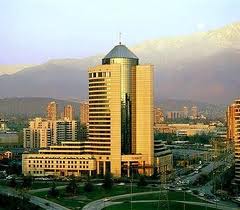


Words of the Day:
agarrar papa- to go all out, over the top, become really involved or enthusiastic
te pasaste!- you outdid yourself!
enchulado- roughly, pimped out
ubicarse- to know what’s going on, literally and figuratively.
top- the best
Unlike pretty much every other day since I’ve been here where I invariably wind up in some random part of Santiago, all my activities today were solidly in the barrio alto. Which was delightful but also weird given that my Tufts in Chile experience usually ensures that I am constantly traveling between extreme landscapes, especially on the days I go to my internship. Even my weekends are extremely varied: while I spent last Friday in a Chilean dive bar, this weekend’s outing took place in one of the most upscale hotels in the city.
Today started with a lovely, delicious lunch at a friend’s house in Las Condes (the 2nd wealthiest comuna) which literally looked straight out of Better Homes and Gardens, followed by a dip in her gorgeous pool :)
Then, that evening, a friend from the program went to perform with a jazz band in the Hyatt hotel, so we decided to go along and dress up. The Hyatt is pretty much one of the fanciest and most upscale places in Santiago. Luckily, I was able to get a ride over from my host mom, but unfortunately, this meant that I arrived VERY early. I sort of wandered in and awkwardly waited, hoping no one was going to ask me what I was doing there. Granted I was very well dressed, but I was still sort of waiting for spotlights and flashing alarms to go off and be like “You there, stop, where do you think you are going?” The fact that this didn’t happen made me feel pretty adult, which was nice...The performance was a ton of fun and we spent all evening there, singing and dancing (the theme of the night was American music, so we were experts...)
Day Trek: Cajón del Maipo


word of the day- el glaciar
Everyone always says this about Cajon del Maipo, so I feel ridiculously cliché saying it, but it’s so cool that something so distinct could be so close to Santiago. I visited the tiny pueblito of Baños Morales (2.5 hours from Santiago by bus) with a friend and we did a 9 mile hiking circuit that allowed us views of colorful mountainsides, natural springs that spewed carbonated water and a spectacular glacier. The perfect antidote to finals....
Tur de Grocery Stores
Word of the Day:
fiambre- cold cuts??
último/a- the absolute worst
For some reason, I ended up visiting 3 grocery stores in 2 days, which like everything else in Chile, provided very strong messages about class. I spent a lot of Hiper Lider and Jumbo to get food for our impending camping trip. Those stores essentially follow a Walmart sort of big box store model, but what I find fascinating and sort of creepy about them is the amount of English that you see in them. Half the packages, especially the toys, are listed in English. There’s usually American music playing. The non-place strikes again!
However, I also ended up accompanying my host Dad to Vegamercado, on the other side of Ñuñoa, past Estadio Central. Driving with Arturo is always entertaining, because he knows the history of every site and always has interesting tidbits to share, rendering even the smallest stream into a highly important agricultural canal. He also is able to give a sense of the transformations the city has gone through, which is very interesting.
Anyway, Vega mercado is an entirely different animal, sort of like a Costco if Costco was in a totally random warehouse and blasted cumbia music.
Sort of like this...http://www.youtube.com/watch?v=HPByxdchIBo
(Speakers up to 11 for full effect) There was absolutely no English anywhere. I’m not sure I’ve ever been in a grocery store that had more of a sense of place.
It also isn’t the sort of place you would necesarily expect to find people like my host parents, except for the fact that they are extremely good at finding a bargain, which is useful for living on a budget. All in all, an interesting sociological glimpse.
fiambre- cold cuts??
último/a- the absolute worst
For some reason, I ended up visiting 3 grocery stores in 2 days, which like everything else in Chile, provided very strong messages about class. I spent a lot of Hiper Lider and Jumbo to get food for our impending camping trip. Those stores essentially follow a Walmart sort of big box store model, but what I find fascinating and sort of creepy about them is the amount of English that you see in them. Half the packages, especially the toys, are listed in English. There’s usually American music playing. The non-place strikes again!
However, I also ended up accompanying my host Dad to Vegamercado, on the other side of Ñuñoa, past Estadio Central. Driving with Arturo is always entertaining, because he knows the history of every site and always has interesting tidbits to share, rendering even the smallest stream into a highly important agricultural canal. He also is able to give a sense of the transformations the city has gone through, which is very interesting.
Anyway, Vega mercado is an entirely different animal, sort of like a Costco if Costco was in a totally random warehouse and blasted cumbia music.
Sort of like this...http://www.youtube.com/watch?v=HPByxdchIBo
(Speakers up to 11 for full effect) There was absolutely no English anywhere. I’m not sure I’ve ever been in a grocery store that had more of a sense of place.
It also isn’t the sort of place you would necesarily expect to find people like my host parents, except for the fact that they are extremely good at finding a bargain, which is useful for living on a budget. All in all, an interesting sociological glimpse.
A Taste of Mistral
The Poet, not the pisco. I promised I'd put up some more poetry other than Neruda, so here's Gabriela Mistral, another Nobel Laureate!
From her children's poetry (They taught this one at the NGO/preschool where I had my internship)
Dame la Mano
Dame la mano y danzaremos;
dame la mano y me amarás.
Como una sola flor seremos,
como una flor, y nada más...
El mismo verso cantaremos,
al mismo paso bailarás.
Como una espiga ondularemos,
como una espiga, y nada más.
Te llama Rosa y yo Esperanza:
pero tu nombre olvidarás,
porque seremos una danza
en la colina, y nada más...
Give Me Your Hand
Give me your hand and give me your love,
give me your hand and dance with me.
A single flower, and nothing more,
a single flower is all we'll be.
Keeping time in the dance together,
you'll be singing the song with me.
Grass in the wind, and nothing more,
grass in the wind is all we'll be.
I'm called Hope and you're called Rose:
but losing our names we'll both go free,
a dance on the hills, and nothing more,
a dance on the hills is all we'll be.
Many of her poems are not this positive, and use death as a major theme, but I had a hard time finding an english translation for many of them.
From her children's poetry (They taught this one at the NGO/preschool where I had my internship)
Dame la Mano
Dame la mano y danzaremos;
dame la mano y me amarás.
Como una sola flor seremos,
como una flor, y nada más...
El mismo verso cantaremos,
al mismo paso bailarás.
Como una espiga ondularemos,
como una espiga, y nada más.
Te llama Rosa y yo Esperanza:
pero tu nombre olvidarás,
porque seremos una danza
en la colina, y nada más...
Give Me Your Hand
Give me your hand and give me your love,
give me your hand and dance with me.
A single flower, and nothing more,
a single flower is all we'll be.
Keeping time in the dance together,
you'll be singing the song with me.
Grass in the wind, and nothing more,
grass in the wind is all we'll be.
I'm called Hope and you're called Rose:
but losing our names we'll both go free,
a dance on the hills, and nothing more,
a dance on the hills is all we'll be.
Many of her poems are not this positive, and use death as a major theme, but I had a hard time finding an english translation for many of them.
The Magical North: La Serena/Valle de Elqui


Day 1:
-We took the bus up to La Serena, about a 6 hour ride along a beautiful blue coastline and rugged rolling hills
-La Serena itself is an odd sort of city, sort of a conglomerate between old historical arquitecture and a relatively new sprawling boom in beach homes
-We had a relaxing time on the horseshoe shaped beach, flanked at one end by a large cross on a hillside, even venturing into the water a bit, playing “futbol” and taking walks past gigantic mounds of shells
-Our delicious dinner of pastel de papas, a casserole with mashed potatoes and meat featured a delicious local specialty for dessert, papaya tinged ice cream!
Day 2:
-We started the day off with a visit to a colorful church and cemetary
-To get to our destination of Valle de Elqui, we drove through the desert, the bleakness of which was offset in places by the artificiality of brilliant patches of green agricultural fields. Because there is sun year round, it makes a perfect place to grow grapes. Minus one thing: water. Combined with increased agricultural pressures and climate change, the pressures for water in this region are increasing, as supply falls. We saw one consequence of this, an albeit beautiful dam that covered what previously had been fields for growing. Although it generates a little bit of electricity, it’s main purpose is for irrigation.
We traveled on through the valley to the town of Pisco Elqui, home to the tourism center of Pisco Mistral, one of the higher end makers of pisco in Chile. Pisco, practically the national drink of choice, is essentially wine that is processed down, making a stronger alcohol. We had a tour of the process and got to try some pisco, although it was by our judgement a little too strong to taste test without some sort of a mixer. After a wonderful lunch, we headed back a ways to visit the grave of nobel laureate Gabriela Mistral, who sadly, while extremely popular in Chile, is largely unknown outside her homeland. (Likely) A lesbian schoolteacher and later stateswoman, she lived much of her life in poverty and obscurity, which is somewhat reflected in her poetry. However, she was also a woman of very strong faith, and many of her writings reflect a religious element. Some of her most well known poetry is for children: as a schoolteacher, she wrote many songs to teach Christian themes.
After a ride back through the valley, we arrived at our beautiful hotel in the town of Vicuña, where we relaxed from the heat for a bit next to the gorgeously landscaped pool. After a gracious afternoon and a lovely dinner, we headed out to an observatory up in the mountains for some stargazing. This area of Chile, due to the relative lack of light pollution and the extreme dryness, is home to many of the world’s scientific observatories.
Unfortunately, due to the light thrown by the incredibly full moon, the stars were not quite as clear as they had been when I was further North in San Pedro, but they were still phenomenal. With the aid of a telescope, we were able to see a close up on the moon, the Pleiades, a nebula and planets, including Jupiter and some of its moons. It was a magical night.
Day 3:
We started our last day with a trip to Gabriela Mistral’s house and museum, which I really liked, because it gave me several perspectives on her life that I had not previously known about. She had a beautiful quote in one of her books that falling in love with a country was something akin to marriage, which really summed up how I felt about Chile at the time. I’ll have to find it at some point and share it with you all...
For something completely different, we stopped by a solar restaurant! Using mirrors and special boxes, this restaurant only uses heat from the sun to cook all their food, which is tremendously tasty because of the slow way it is cooked.
We made our way back towards Santiago, but not without one more stop: in the beach town of Guanaqueros, a beach town with beautifully colored ocean on one side and desert on the other. We had a nice lunch of shrimp empanadas and fish before heading back for a long ride home.
Major Catching Up to Do....
So the end of the semester was a very crazy time in my life.... Meaning the reflections on that time are slightly delayed. Apologies! Anyways, here are some more adventures...
Subscribe to:
Posts (Atom)