Sunday, February 3, 2013

Matagalpa Photos

Sunset overlooking a citrus grove in Selva Negra

Coffee beans, pre soaking, drying and roasting

Strangler vines in Selva Negra

The view across the little lake in Selva Negra

Coffee beans in the wild, NOMZ

Matagalpa City

Cloud cover near Cerro Apante

Color-coordinated PCVs at Cerro Apante

TEFL 60 (and a grey shirted environment 60 vol) at La Cascada Santa Emilia

Thursday, January 31, 2013

A new frenemy


My host family, at some point while I was out of the house, acquired a piglet named Renata. I think she was a gift, but at any rate, she is ours now. The last few days, for various reasons, I've (sort of) gotten stuck taking care of her. This has been problematic because a) I wasn't given a lot of instructions, b) I don't really like most animals very much and c) I know very little about pigs. For example, how much food does one need to give a growing piglet? Can you kill it with too much food, like a fish? How does one yell in Spanish at a pig to discipline in, and teach it that it cannot under any circumstances, come into the house from the courtyard? Can you yell at it like a dog?

Renata is very necia, roughly meaning naughty. She likes to get into things, including my bedroom, which she seems oddly fascinated with for some reason. And where she decided to eat at my flip flops and get her muddy little snout all over everything, just after I had mopped the floor. Then, even more hilariously, she somehow climbed into my bed, after I thought I had shut the door. I had to drag her off, squealing all the way. Apparently, my host brother had moved her mattress, so she was hunting for another one. Lord only knows how she was able to make it into my bed because it's high off the ground. Stupid pig. Or rather, highly intelligent pig, wherein lie all the problems.

She is kind of cute though, with her little sunburnt back, spots, stubborn determination and inquisitive snorting.

Here's to hoping someone else ends up with her before Renata becomes food.

Italinica Food


Being here in Nicaragua has already changed the way I cook. My host brother asked me if I wanted to cook lunch the other day, and I excitedly accepted. Since he is not working right now, he's been doing household chores, which often means that I am lazing about in my hammock studying while he is cleaning and cooking. Although this was an entertaining big old F- YOU to the machismo of many households, I was starting to feel bad for being rather lazy.

I decided to cook some pasta, since that is vaguely representative of American cooking and my vaguely Italian ethnic heritage. After having delicious Italian food in Matagalpa the other day,  I knew it was pretty feasible to make with local ingredients. I had planned to make a tomato sauce, loaded with garlic and basil, but we didn't have much garlic, and I realized everyone would probably not find the sauce filling enough without meat, so I decided to add a little ground meat. And then I added more salt than I would have, guessing that everyone would find it not salty enough were I to follow my instincts. And added a lime, because it was there, and who doesn't like limes? And caved and made a side of guineo cuadrado, a bland banana relative, that I'm completely not fond of because more food was culturally called for.  By the time I was done, I was left with a dish that wasn't really Italian, but wasn't really Nica either.

However, I drew the line on two things. I refused to overboil the pasta and al-dente it stayed. And when my host brother asked if I was going to make rice to accompany the pasta, I refused to carbo load things further, and explained that we eat don't eat the two together. It was sort of awkward, but the food was good. At least I thought so.

We were talking about the challenges of defining what is American the other day at Reconnect. Because America is made up of so many different things, it's hard to describe satisfactorily what  "typical American dish" or "typical American music" is. But I think something that perhaps is a uniquely American experience is that many Americans have, at some point, tried a food that was something they were not familiar with, in terms of ingredients, flavors, or maybe even how it is supposed to be eaten. Being confronted with foreign food isn't necessarily as common an experience for people from other cultures. Guess I'll be facilitating a lot of those exchanges in the next two years. Sounds delicious.


Word of the Day:
nebliselva- cloud forest  (nuble- cloud + selva-forest)

Lucky me. I was able to go see a bit of the Northern part of Nicaragua this week, and I loved it. Mountains? Coffee? Chocolate? Yes, please. Because I want to mix things up, this is going to be part travelogue, part journal and part travel guide.

We had a meeting called "Re-Connect" with all of the 30 or so TEFL Volunteers up at Hotel Selva Negra, just outside Matalgalpa City. It's a gorgeous coffee-farm/nature reserve/eco-friendly hotel, owned by a German man with lots of cute cabanas that show off the German influence of the region, where many Germans moved in the late 19th century to farm. For this reason, and because it was cold, it reminded me of Southern Chile, the parts of German influence at least. It was a really great time. It was so good to have quality advice from our bosses and people who've been working for a year already for how to get the school year started right, work on additional projects in our communities and report all the work that we're doing. It was also just wonderful to be reminded of how strong our support system here is, from our fellow TEFLeros all the way up to our bosses. It was an emotional few days, but we also had some great outlets, like early morning hiking in the cloud forest, unlimited coffee and tea, and good food (VEGETABLES!!!!!!!!!)Seriously, you can win over a Peace Corps volunteer pretty easily with chocolate and vegetables. Catcalls, no, but a well- cooked carrot, maybe.

After Reconnect ended, TEFL 60 (my pledge class, for lack of a better descriptor) wasn't quite ready to bid adieu, so we stayed in Matagalpa City for a while to hang out. It's one of the bigger cities in Nicaragua, nestled up in the mountains. Lonely Planet's description of Matagalpa is pretty spot on. I loved it there. There's a gorgeous white cathedral in the center of town that is impressively white, beautiful parks, gorgeous hills you can climb up to look out over the city. The air is clean and crisp. It's kind of cold. There's good grub to be had, hip night life, cafes and just all the city-bustle that I've really missed, compounded by people driving like maniacs through the small streets. There are a fair number of tourists, but it's not as overwhelmingly touristy as Granada or Leon. It was just interesting to observe the social dynamics at play. Perhaps because of the nature of coffee farming, there was a feeling of social inequality and unrest that I haven't quite sensed in the same way in other parts of Nicaragua, perhaps because the mountains render everything visible...shacks high on the hills were visible from the city streets where the occasional Mercedes or fancy convertible roamed.

We stayed at a cool relatively hostel, Buena Onda (Good Vibes), which featured cheap but clean accomodations ($7 nightly plus free coffee and water, $1 towel rental). We got some welcome variety in our diets- eating Mexican food twice, delicious Italian food and some good ole comedor style deliciousness...rice and beans, cuajada, cream, and the freshest tortillas you could want. We also ate a ton of chocolate. There's a company nearby, El Castillo de Cacao, that makes artisanal Mexican style chocolate,which is a little bit bitter, but incredibly rich. Spent way too much money eating that, and the factory wasn't even open for touring. And lots of rosquetas, graham cracker tasting corn snacks, and rosquillas, which a friend dubbed "the cheese-its of Nicaragua" were eaten too. NOMZ. Nicaragua's corn products are soooooooo good.

In between all the eating, we got in a little bit of nature time as well. Early one morning, we climbed Cerro Apante which is just outside the city. Quite literally, the directions to get there are: just keep walking straight.  You climb through a neighborhood up to a dirt path that just keeps going. There are two roads to enter. There's one turn-off, through a gate, that's first, which is the harder way to climb up and a second, about 10 minutes later, that's paved most of the way up. We wandered into a coffee farm and then into this area where these men were working, but if you follow the dirt road you come to a small look out hut. The view of the city is amazing and it's a really cool area ecologically too. Be forewarned though, a random man, who may or may not be legitimate, will charge you C$30 to enter or exit, depending on the route you take.

We also visited the Santa Emilia waterfall, about a 1/2 hour busride outside the city. It's owned by a super friendly Bolivian man who used to work for the World Bank. There's lot of trails to hike, although we came late in the day. (C$200 taxi ride to get there or C$15 bus ride- take from Cotran-Norte towards La Dalia/El Tuma, C$30 to enter).

I was scared to leave. I hadn't really had that kind of anxiety about going back to site before, which I think is natural after so much bonding time. It's hard not to feel that you're starting over from zero in your relationships with everyone in your community when you haven't been there for very long. Part of what didn't help was that I have a giant (and admittedly very romanticized) obsession with mountains and coffee and that whole scene, and had been hoping for a site up that a ways. But when I finally did get back to San Miguel, it felt right, unexpected but natural somehow. A sense of belonging that is perhaps undeserved but at the very least, a calm that I can work with.

Gorilla Hunting

Güirilas, pronunced wirilas (or gorillas, if you're a zany group of Peace Corps volunteers), are a standard food of Northern Nicaragua, that I have a great fondness for. I will buy a güirila whenever one is offered to me, even if I'm not that hungry.

Essentially, güirilas are hot corn pancakes with a hunk of soft, salty cheese called cuajada in the center. The corn is sort of sweet and melts the cheese just slightly if they're warm enough. Usually you can find mobile vendors selling them on buses for less than 50 cents.

In the northern city of Sebaco, however, there is a pilgrimage worthy güirila stop. Dona Daysi's Güirilas, across from the gas station in this market town makes the best güirilas in this whole country. At first, I was skeptical about having to wait in line and pay a whole dollar for a güirila, but friends assured me "it will change your life."

It was actually that good. Love at first sight, a perfect run, a good book and a really good cup of coffee kind of good. Piping hot, fresh out of the oven, with the sweetest, freshest, softest corn and just the right amount of cuajada, a dream come true.

Now I just have to find a plausible reason to get up to Sebaco more often.

Peace Corps Gringas Gone Wild(ish): Misadventures in Managuan High Society


Managua is always an interesting place to visit as a Peace Corps volunteer. For security reasons, we spend most of our time during visits in very fachenta places, such as outrageously nice malls and upscale neighborhoods. This usually results in hilarity since the elite Managuans who inhabit such fancy places look really good all the time and the average Peace Corps volunteer, arriving after a long bus ride on decidedly ordinario transportation, looks a step up from homeless. Sort of like a scruffy, unshowered, medical student doing his or her residency. Secondly, going to such fancy places merely reinforces the fact that, despite what we might have had in the States, we do not have a lot of money anymore. For example, I thought about buying exercise pants until I realized they would have cost more than my food and rent for the month. Since we are paid on par, or more than a lot of the population, this raises the humbling question: Who has the money to shop here?

Anyways, my friend Caroline and I, went to the fanciest mall in the country, Gallerias, to get her computer fixed, while we were in Managua the night before a meeting. Having had 6-7 hour bus rides and in Caroline's case, also an early morning panga (boat) ride on top of everything else, we were badly in need of some coffee. So badly in need, that we neglected to realize that we had gone to the Flor de Cana rum brand's coffee stand, and the reason that the coffee was so expensive was that it had rum in it. No wonder the man had looked at us funny when we said we wanted our coffee to go. Needless to say,that was about the last thing that my body needed, but having spent a lot of money, I refused to not drink it. Which led to me wandering around the mall, rather giggly and socially suspect while we pretended that we could afford things, before giving up.

After stocking up on  things at the grocery store, we went to a spinning class, with a spin instructor who was sort of like a flamboyant, Latino version of my Uncle Jimmy. He was very crazy and demanding, which was entertaining, because I was still sort of tipsy, hadn't been to a spin class in months, and was finding that some newly acquired hermosa-ness was impeding my ability to do what he wanted.  

After dinner, we decided that we would spend whatever it took to get a really good dinner. We got sushi with a nutella crepe for dessert which was AMAZING, if not a very coherent menu.

Morals of the story: 1. Sometimes it's ok to treat yourself.
2. Managua isn't that bad of a place if you have money.
3. Don't buy coffee at the Flor de Cana stand unless you actually want to get tipsy.

Tuesday, January 15, 2013

Some thoughts on Tourism in Nicaragua


Nicaragua's been all over the New York Times lately as a hot place to visit. It was voted #3 out of places to go in 2013. Tourism is growing fast. With good reason, it's gorgeous here! There's plenty to see, and as vacation destinations go, it's really not that far from the US. There's plenty of talk now and whether or not Nicaragua will be "the next Costa Rica." There's a lot to bite into with that question, if you're interested, here's an article. Another article, from the NYT magazine "A Delicate Balance" irked me a bit. Mainly because the article was mostly about a photo-shoot and partly because I felt like bits of it were poorly researched. ("We're told that the difficult to-get-to island of Ometepe is a popular destination..." Umm, seriously? There are ferries all the time..It's about a Nantucket on public transportation level of difficulty to get to)....

One of the things I've find really interesting about this coverage though, is this automatic assumption that more tourism will automatically help "the second poorest country in the Americas." I'm pretty skeptical about this. Without a doubt, more tourist dollars flowing into Nicaragua will raise the GDP and create trickle down opportunities for employment through related industries. But the poorest regions of Nicaragua (the Northern mountainous corridor and the Atlantic Coast) aren't going to be affected much by potential tourists, particularly the adinerado ($$$$) sort of tourists the NYT article was arguing Nicaragua should make more efforts to draw in, instead of the usual backpacker hippie types. And it's true, these really are the only types of tourists you frequently see here, so much so that one of my FAQs is "Do Americans take showers regularly?" In my opinion, however, the growth of  giant resorts on the coast will merely exacerbate existing regional patterns of inequality.Which isn't to say that it won't make life better for a lot of people, because there are people living on the edge all over the country, but it's far from a holistic solution to Nicaragua's struggles with poverty.

I had a really interesting experience when I was living with the host family in Carazo. For their equivalent of Independence Day, we traveled to visit Tola, a town that boasts many of Nicaragua's most beautiful beaches. The roads to get to the beaches were all dirt, although a paving project was underway, supposedly supported by a new luxury resort. When we got to the beach we wanted to visit, reportedly the most beautiful in Nicaragua, according to internet research by a family member, we discovered that it was a private resort (I believe it was American owned) and that we couldn't enter. It was an uncomfortable moment: I was traveling with leftist Nicaraguans, conscious of their nation's history and nationalistically minded. And what could I respond, confronted with this situation? Why shouldn't they have a right to visit a beach in their own country? And it's something that Americans can't really relate to: other countries don't really own our stuff, and our territorial sovereignty hasn't been seriously questioned since the War of 1812. Weaned on tales of our own supposed supremacy among nations, we can't really relate to the uneasy feeling that arises from having this type of foreign investment. Sure, there are plenty of private beaches and such in the US, but there's a fundamentally different feeling about it.

When we finally rerouted towards another beach, we found another resort under construction nearby, with giant manicured lawns (despite the dry, sandy coastal climate and the fact that residents nearby probably lacked consistent access to potable water) and armed guards out front. It wasn't clear how local residents would benefit economically from such a space after it was constructed, other than through service industry jobs although who knows where this fortress would find its laborers.

The "Delicate Balance" article referred to not cutting corners and having community oriented projects included in giant resort developments as a "noble, if privileged approach to development." Maybe so, but why shouldn't this be the standard? If we're going to wrest people's country away from them to give rich tourists the experiences they desire, why not make their lives a little better in the process?

Carnivals, Puppies and Pupusas: Back to El Rosario


...An adventure in which the front porch ferris wheel makes a comeback


Word of the Day:
rueda chicagua- ferris wheel

hermosa- literally means beautiful, but Nicaraguans will say "Estas mas hermosa" to mean you've put on weight, but here it's a compliment. And Nicaraguans have a 6th sense for weight changes.

========================================================================
After camp was over, I made it back to El Rosario to visit my old host family. Being in Peace Corps has really changed my approach and desires for traveling. When I was living in Chile, I was always jetting off (more accurately, taking arduous 12 hour bus rides off ) to new places. But this time, I wanted to spend my "out of site days" to go see some familiar people and places. Out of site days are days that you are allowed to be away from the place that you work without officially taking vacation time. This is a necessity in a lot of cases because going to the bank or going shopping properly are activities that can't usually be done where you live. Anyway, I guess having two years in a country gives you the feeling that you don't really need to rush to see all the sights.

It was interesting to be able to see things in El Rosario with fresh eyes, after I'd left about a month and a half ago. I secretly kind of like the Pacific Coast of Nicaragua better, although I love San Miguelito and Rio San Juan is growing on me. My first thought upon arriving in El Rosario was "Wow, this incredibly close to everything and quite urban" whereas when I first arrived there, I was like "OMG WHAT IS THIS PLACE, this is the smallest and in the middle of nowhere!!!!!!!!" Funny how your parameters for judging things can change pretty quickly. My second thought, shared by my travel companion and former training mate Jamey was "What is that tremendous amount of noise?" We had forgotten entirely that El Rosario has a whopping TWO fiestas patronales, and that the entire month of January is basically a fiesta here. So when I climbed out of the taxi, I realized that the street where my former host family lives was once again blocked off by carnival games, accompanied by lots of extremely loud MUUUUSSSSSSSSIIIIIIIIIIIIIICCCCCCCAA. My hopes of having a quiet weekend of recovery from camp were quickly dashed. I had forgotten how loud El Rosario is. A friend once told me it was once voted the safest pueblo in Nicaragua- I wouldn't doubt it, and I bet it is up there in terms of loudness as well. I think Americans have this vision of small towns/villages as quiet, peaceful places, which has nothing in common with the reality in the rest of the world if Central America is any sort of indicator.

It's funny how much had changed in a month, even as some things stayed entirely the same. My host mom has acquired a dog named Boston. It's cold here right now (like 50s at night), and windy because it's approaching dry season. All the furniture in the house was completely moved around. Instead of two Nicaraguan doctors, a roving cast of soccer players and family friends from El Salvador were renting the other rooms. There was a fresh coat of paint almost everywhere, in the house, and most places in town. 2 extended family members had gotten married. There is a pizza place in town now- that would have greatly improved our quality of life during training. A children's library had reopened. I felt comfortable enough to go on a long run to a nearby town, La Paz.

I had also forgotten how awesome and completely crazy, in the best kind of way, my training host family was. I fell right back into the weekend routine that we had had when I left, as if I had never been gone. It was especially fun to reunite with all my host mom's grandkids.

So, here are some amusing things that happened (and as usual, there was loud music blasting in the background for most of this):

-I accidentally interrupted a prayer service by walking into the house and exuberantly  hugging my host relatives. Missed social cues on that one...

-Boston, the new dog, which my host mom begrudgingly acquired pre-named from her nephew, has a stray doppelganger, right down to the string around his neck. The doppelganger dog got in the front gate, and then tried to get into my host brother's house. When my host mom tried to scare it away with water, it squeezed through the gate into his house, where it thoroughly ensconced itself in the bathroom. It took 3 people, a lot of dragging and a broom to extricate him. Then, after all that, the real Boston ran away. Doppelganger confusion continued.

-Watched a traditional dance exhibition at the cancha, the court. El Rosario has an absurdly nice cancha which I had never properly appreciated before.

-My host mom had a her birthday this weekend, which I wasn't aware of, until a mariachi band started serenading her at 3, including with the tune  "Hoppy Birthday". At first I thought it was a diana, an early morning parade to celebrate the Virgin Mary, but I realized what was going on when it became clear that the music was literally just outside the house. I felt really bad for not knowing it was her birthday until her granddaughter told me that she had forgotten too, and had yelled at the mariachi band to be quiet, before realizing who it was for.

-There were a ton of people in the house, pretty much none of whom I knew. Including a lot of Salvadoreans, who made homemade pupusas for my host mom's birthday dinner. Pupusas are basically little corn pancakes with different things inside, in this case, fried beans and fresh cheese, topped with cabbage salad and tomato salsa. Exquisito. Definitely some of the best food I've had in Nicaragua.

-Someone bought the 4 year old cousins whistles, which added another noise layer. AYYYY

-I taught origami to the grandkids, since teaching 150 Nicaraguan youths during ACCESS camp clearly wasn't enough. The house is now littered with cranes (herons because that was the only thing I knew the word for), balloons, crows, and butterflies. Also, I introduced them to candy corn, thanks to Hilary Clayton's excellent care packages.

Access Camp


A Rainbow of PCVs


Team New Jersey...with their native New Jerseyan


Nothing like a little singing

Hard at work in the classroom

Telephone

On a scavenger hunt in Granada

I spent the last week working at ACCESS camp, a summer camp that is part of a larger program sponsored by the US embassy. While it was a good break from my pre-school boredom, it was a ton of work and quite exhausting, because there were 300 kids staying at a hotel, spread out across dozens of cabanas on a labyrinthine property. Most of the 14-16 year- olds had never been away from home before, and being 14-16 year-olds, required quite a lot of supervision. The Peace Corps volunteers ended up doing much of the counseling and counting and wrangling, which was not exactly what we had expected.

The ACCESS micro-scholarship program is a really neat program though. High school students, of lower economic means, which I think for their purposes mostly includes students at public schools, take English classes for at least 2 hours every day for 2 years. At the end of the program, most students exhibit very high fluency, some even at "Advanced" speaker level. They are encouraged to dream big and have the same sense of entitlement to a good future that their wealthier peers might feel. At the time of camp, the kids had only been taking classes since May, but many of them already had great levels of comprehension and speaking ability. It was a nice change to be teaching kids with a strong interest in learning English and with unlimited supplies. Free photocopies? Pens? Flipchart paper? Colored paper? Glitter? I could work with that for sure.

Students went to English class every morning. I got lucky and had a really great Nicaraguan counterpart to teach with. We had pretty good co-teaching chemistry because he preferred to teach grammar and had a lot of ideas for warm- up activities, while he gave me space to teach lessons on slang, pronunciation, reading and the environment. At least, I think he was giving me space...maybe I was just being forceful. One of the really interesting things I've found as a gringa working here is that I don't even take into account that men are sometimes unused to working with women as equal partners. I just do my thing, and then later realize sometimes that it might be unnatural for them.

The students then spent the afternoon going to different activities in English, from Treasure hunts, to zumba class to electives. For our elective, former training mate Jamey and I taught origami...to about 60 kids at a time...with a microphone. It was extremely entertaining, although insane, and required a lot of repetition, patience and cognates: "Form a triangle...Form a rectangle...Fold the interior square...interior square."

We gave culture classes on our hometowns and Thanksgiving (I played nice and didn't mention any of the darker aspects of the holiday). We made the kids make hand turkeys and write the things they were thankful for on the fingers, which was a lot of fun. The kids also learned about Martin Luther King Jr, and the civil rights movement by watching a movie.

We also got to learn a lot about the students' own cities. Coming from 12 different cities all over Nicaragua, the students shared facts about themselves during numerous presentations. And during a talent show, which became vaguely inappropriate, because watching teenagers grind up on each other during dance numbers sure was awkward.

We also took the kids on a digital scavenger hunt in Granada, which was completely insane, but still pretty fun, especially because it's such a beautiful city.

On the last day, the US ambassador and some other VIPs came, and the kids did presentations about ACCESS for the closing ceremony. They also took hundreds of pictures of us. I felt like a C-list celebrity. The best part of the last day was that the Peace Corps director came for the ceremony and after, treated the PCVs to lunch, at an American themed diner. We were all extremely excited about the milkshakes and hamburgers. PCVs are some of the most easily impressed people on the planet. Bring us dark chocolate and we'll probably name our first child after you. Treat us to milkshakes, and man, who knows what you'll get.

Saturday, January 5, 2013

Purty Pics

Aprovecharing of the free internet: here's a bit of my morning in Granada, Nicaragua's colonial capital.

I feel like there's something vaguely ironic to this image that perfectly sums up my feelings about Granada.

Parque Central

Iglesia La Merced, which boasts the best view of the city

Volcan Mombacho looms behind


La Catedral from above, with Lago Cocibolca behind it

Tons of places have gorgeous gardens in the center of the house, like this coffee shop


Viguron, Granada's specialty food: yucca, pork rinds, tomato and coleslaw with a slightly spicy sauce and star-shaped slightly sour fruits. NOMZ 

Let them have paint!


Repainting team hard at work...

Yup, 4 ladders. San Miguel boasts the largest world map in Nicaragua, so this was necessary

Sunrise on Lake Cocibolca

O. Henry didn't coin the name "Banana Republics" a propos of nothing. Lots of cargo aboard the ferry. 


Las Isletas de Granada...apparently there are 365 of them, although I couldn't independently verify that. 

A view of the city of Granada from the ferry

 
Some nice cloud cover, drifting over from Volcan Mombacho

Chilling in expat heaven, Granada en route to go work at an English camp. I want to hate it for being so touristy and fachenta, but also things are really nice here. I'm hanging out in a sweet cafe and there is so much internet here!!!!!!! Hence I went a little bit overboard on the pictures. (As usual, click on them to make them bigger.) Also I just had real coffee for the first time in like 3 months (!!!!!!!!!) and waffles with chocolate for the first time in like 6 months. This is basically the best morning ever, despite its unpropitious start during my 12 hour with a "storm" squall on the lake at 2 am. Nothing like a little motion sickness early in the morning. Luckily, I can fall asleep on pretty much every surface as long as I can lie prone, so I managed to fall back to sleep again pretty quickly. Basically, despite the perpetual motion, I enjoyed the boat road much more than a bus ride, even though it took twice the amount of time. I did, however, have to question their movie choice- it's unclear how a very bad zombie movie set in Africa and an even worse terror movie were supposed to be conducive to sleeping.

Anyways, a few highlights from this week:

-New Years Eve and Day were quite enjoyable and very relaxed.

-An RCPV (Returned Peace Corps Volunteer aka Former Volunteer) who left San Miguelito 3 years ago came back for a visit and I met her on New Years. Having her around was really reassuring- seeing how quick and comfortable with local slang, even after 3 years, hearing that she cried all the time and hated her first month here (mine was nowhere near that bad), and seeing the relationships she was able to build was really comforting. During her in San Miguelito, she had worked on a world map, that sits near the muelle, wharf. Her goal for the visit was to repaint it. Seeing how my schedule had a lot of free time in it, I came down to give her a hand, which was great, because I met a lot of cool people, some of whom I might even be able to work with on projects. And it looked really good with a fresh coat of paint, although after 2 full days of work,they were still far from being done. It's a small world, but I wouldn't want to paint (all) of it. Bad drumroll. Anyway, the map repainting was really inspiring too because there were several 14-18 year old boys involved, and some older seemingly vago dudes who turned out to be really cool. It was a great reminder to not judge by appearances. It was so great to see what everyone was able to do if just given a chance to blossom, a task to do, a brush to paint with. One of the saddest things about human societies in economic difficulty is the way so much potential is wasted, especially for teenage boys, who often fall into trouble because they have precious few legal or productive outlets to fill the human urge to create, leave a mark, fight the boredom of day to day. .  Working on this has really made me interested in trying to work on a map project in one of the comunidades, as the settlement outside of the "urban center" of San Miguel are referred to.

-This was an interesting week for wildlife sightings. San Miguel is full of garzas, herons, so there were lots of those. I  saw a monkey, except it was actually a really awkward situation. I was trying to go running when I ran into my sitemate, Christina, at her Spanish teachers' house. I hung out for about a half hour but then I really needed to go running because it was getting late. As soon as I left, Christina called me to tell me to come back to see a monkey. I had just rounded the corner when I saw a monkey fall straight and stiffly down from the power lines. It looked dead for a good minute. Then it kind of dragged itself up a tree, slowly. So that was pretty shocking. Yesterday I had my first big spider in my room sighting. Nice little half dollar sized body on that thing, and some legs on the slightly chubbier side. I'm surprised I hadn't seen one up until now but I guess I've mellowed out because it didn't phase me that much. Although it was hanging out on my bra and it would have probably be a bigger deal had I actuallly gotten dressed in my half asleep state without noticing. Lastly, I ate a giant fish with its head still on, when my sitemate and I went out to eat one night and due to inquiries using incorrect vocabulary were told that the restaurant only had fish. It's convenient that I like fish, because that is definitely one of the upsides to living in a fishing village.


Thursday, January 3, 2013

Gorgeous Water

Sunset in San Carlos, Rio San Juan, the very tail end of Lake Nicaragua- there's an sculpture of an Indian man in that boat there

Sunset in San Miguelito, or as I have affectionately started calling it, "The Mig". This is gorgeous, but it's not even the most spectacular. One thing I love about this place is that the sunset is different every single day. Sometimes the twin volcanoes of Ometepe are visible, sometimes the mountains of Costa Rica are clearly in view, sometimes closer islands....and the color of the water is always slightly different.

Wednesday, January 2, 2013

A Most Excellent Song

This has teaching potential. 

Tuesday, January 1, 2013

Rum is not your friend but merengue has potential: A Nicaraguan NYE Survival Guide


*New Years can be stressful time to be away from home. Don't make it harder on yourself. Have some fun.

*If you see children under the age of 10 in the street, keep a wide berth. Be alert for visible sparks. Be able to hear does make life more fulfilling and firecracker explosions right next to your ears don't generally help in that regard.

*Rum is shockingly inexpensive in Nicaragua, which seems like a positive thing at first glance. Don't be fooled; rum is like that bitchy turncoat you were friends with in middle school who's badmouthing you the second you're out of earshot. Just say no. Especially because there is a high possibility that someone will offer you some sort of corn/sugar/rum based dessert on New Year's Day such as atolillo or sopa de borracha (drunkard's soup) which you will be obliged to eat out of politeness and will not sit well if you estas de goma, are hungover.

*Do attend the dance party in town. What else are you going to do, sit at home? Burn an effigy of the old year? Fire is scary. Go to the party. Everyone will be there, including a smattering of small children and the older crowd. Not to mention the majority of your co-workers. Don't let the erasure of any space between your personal and professional life grind you down- try to dance! As a general rule, don't turn down dance partners, unless they are like 30+ and visibly drunk.You'll know. Do what you feel.

*Merengue isn't hard. You, yes you, can do it! Just hold onto whoever you are dancing with, keep marching at all times and waggle your hips the sexy way. Yes, this is possible. Bachata is easy too. You can count to 2: this means you can dance bachata. And don't be scared if everyone essentially starts a mosh pit to ska or rock while beer is thrown on everyone in time to the music. These things happen. Just stay cool and try to keep your feet from being stomped on.

*Visit with people afterwards. Because there's nothing that shows you're embracing the serendipity of the new year like chatting with strangers at 2 am.

Friday, December 28, 2012

Tools of the Trade

Look at the pretty cartoon vowel pronunciation chart I made today! And be glad you are a native English speaker (if you are). English has a wicked number of vowel sounds: it makes your life infinitely easier not having to learn this stuff. And let's not even bring up spelling them....

One of the PCVs in Leon taught us this really cool way to teach vowel sounds to kids: each one of colors on the chart shows off a different vowel sound. So when you're teaching new words, you can use these previous associations to explain pronunciation. As you go from top to bottom on the chart, you open your mouth more to form the sounds. From left to right, the sounds are further back in your mouth.


Book Reviews


So, I have a feeling that the average PCV (Peace Corps Volunteer) dramatically out reads the average American citizen. I don't have any statistics to back this up, but I'm basing this on personal experience, discussions with other PCV friends and the much loved PCV library, which is full of all kinds of fun things from Eneagram personality books to political books to books on animal husbandry.

Here are some things I have read.

Infinite Jest- David Foster Wallace
This book is fantastically zany and perfect for a person with a lot of time on her hands. I've only gotten half way through it, because it is 1100 pages long, 200 pages of that being footnotes. It's sort of a futuristic yet oddly vaguely plausible novel about the ends to which the American obsession for entertainment and escapism led. The four nouns to describe it most simply would be: tennis, addiction, Canadian separatism and film making, but that hardly begins to describe the crazy vortex that is this book. Basically, the nerd equivalent of a wild kegger in enjoyability.

Confessions of an Economic Hitman- John Perkins
This book really irked me, mostly because Perkins' writing style was so obnoxiously bad and self aggrandizing even when he was trying to be self deprecating. His writing style made me especially annoyed because he claimed he was good at his job because he was such a good writer. OK, buddy. Basically its his life story about working for a Haliburton type construction firm as an economic development international big wig and how he basically played around with econometrics to get third world countries massively into debt and reap billions of $s. Maybe I'm too cynical of a person, but every time he would be shocked a some jerky thing his corporation did, I was like,"Yeah, this is surprising why??" Also every time he would be like "And then I had another liaison with a very beautiful woman" I wanted to punch him in the face even more. Not misanthropic, I swear.

Madness and Civilization-Michel Foucault
This was a reread, although I was far more impressed with it this time, perhaps another example of my great enjoyment of classic literature read in a semi- deranged state, like the time I read Crime and Punishment after having my wisdom teeth out and was obsessed with it...I finished rereading this on the bus at 6 am after a slow and bumpy overnight bus ride on a former school bus...I'm considering starting a 12 step program on "how to make yourself completely unrelatable to 99% of the world's population". Step 5 is "Read Foucault on public buses in a foreign country."

I digressed...So, Foucault was a genius. He makes you look at things that are so ingrained in modern Western culture, yet so obviously shaped by power relations with the state (the rules and tabooes governing sex, attitudes towards madness, imprisonment) and enlightens their historical roots, with an erudite simplicity that is maddeningly original: you feel stupid for not having ever thought deeply about these sort of things before, yet happy for having had them opened up and brought into the light.

Chasing the Sea: Lost among the Ghosts of Empire in Central Asia- Tom Bissell
This is an awesome book. It shouldn't be, because it is sort of lacking in a plot, but Tom Bissell is such a fantastic writer that he brings the complexities of Central Asian history to life in a way that is beautiful, tragic, haunting, enticing, and obnoxiously self righteous/snarky but just enough to be funny. The plot of the book features Tom Bissell, a former PCV who "early terminated" going back to Uzbekistan, the country where he served, to go to the Aral Sea, arguably the worst ecological disaster in human history, to write about it. Not that much of the book is even about the Aral Sea, but it's still fascinating. Especially if you find learning about environmental disasters and dictatorships interesting.

In the Valley of the Mist: Kashmir: One Family in a Changing World- Justine Hardy
Justine Hardy writes well and does a pretty good job making the intricacies of Kashmir accessible to the average reader. Kashmir is fascinating, because it's so messed up and trapped between forces bigger than itself, and so under-reported. I had the pleasure of meeting the author twice during the EPIIC Program last year. She's a powerful speaker. I had a lot of skepticism about the quality of her aid work, particularly as portrayed in this book, but she makes an excellent case in person, particularly for her current projects which focus on holistic approaches to mental health in protracted conflict situations. Here's a powerful video of hers from the Oslo Freedom Forum, a human rights conference in, you guessed it, Oslo, Norway.

My Happy Days in Hell- Gyorgy Faludy
The story of Hungary poet Gyorgy Faludy's (who I had never heard of but felt like I should have) travels all over the globe escaping the terrors of World War II and then walking into communist Hungary's trap out of his intense desire to return to his homeland. Half the time you're reading the book, you kind of want to hate Faludy for being such an intellectual snob, and then you reflect on what he's been through, that his fierce intellectualism basically kept him alive, and it's jaw dropping.

Cien Años de Soledad- Gabriel Garcia Marquez
To say I read Cien Años de Soledad in Spanish is true, to say I understood all of it, less true. I understood most of it, although I was a bit stymied by vocabulary I didn't know, lots characters with basically the same names, and sentences featuring creative play on time:
"Many years later, in front of the firing squad, Coronel Aureliano Buedia would remember that long ago afternoon when his father took him to visit the ice."

Even if later generations of Latin American writers (the McOndo movement for example) have been frustrated by the legacy of Magical Realism for creating an image of Latin America as a fantastical rural backwater, the literary contributions of Marquez are pretty undeniable. Definitely a good read.

A History of Nicaragua- Clifford L. Statten
A pretty good history as histories go...dry,but thorough, and generally straight shooting about who has responsibility for what, unlike other leftist histories of Nicaragua (cough cough Thomas Walker's In the Shadow of the Eagle) which just want to blame the US for every bad thing that has ever happened to Nicaragua, which is nearly as insulting and agency robbing to Nicaraguans as the US' habit of intervening in their affairs every 5 minutes.

1Q84- Haruki Murakami
This story is spellbinding. Like most Murakami, the plot is fantastically bizarre and would be off-putting were it not so impossible to put down. We're talking about a love story with magical creatures, multiple worlds, urban disillusionment and isolation, a contract killer, a vaguely political cult, and weird, weird sex.


My experiences running in Nicaragua


I am a runner. Perhaps a reluctant, extremely lazy runner, but it's a big part of me, which I haven't attended to particularly well in the last few years, but am trying to rediscover. Given my tendency to be a little bit too intense and possibly masochistic, after running every now and then during training without much enthusiasm or drive, I decided that I would motivate myself by training for a 1/2 Marathon which basically goes straight up Volcan Concepcion on the Island of Ometepe in the middle of Lake Nicaragua. Whether this was a good or completely insane idea remains to be seen, but you will certainly hear the story either way.

Definitely one thing that's changed about my personality here, and I'm not sure if it's a good one, is that I am sometimes paralyzingly worried about what other people are thinking about me, whereas in the US, especially when living in a place like Boston, I could not have been less interested. Running is a weird thing here. No one really does it. A lot of women go walking, but running, except for people on sports teams, is not the norm. It makes sense: people here have enough physical labor in their lives, even if they don't do farm labor. (See my descriptions of clothes washing for example). So for a while, I didn't go running because I was afraid of weirding people out especially since no-one does things by themselves here. But then during training, I became really stressed out from not having a physical outlet, so I decided it needed to happen. Obviously, running tends to attract some stares, occasionally catcalls (although I don't get catcalled here as much as in Carazo) and stares from dogs. You know you are a freak when the animal kingdom is judging you. It's sort of like a natives confronting Spanish conquistador, worlds colliding what-is-that-thing kind of moment, except instead of wearing armor, I am wearing crappy pants, am dripping with sweat,  and am shockingly red faced. (I've been watching a lot of movies about Columbus lately)

To avoid scaring everyone too much, I have a system: I walk through the center of the town, but then run once I get to the limits of the major settlement. Sort of like how Medieval madmen were perfectly free to roam outside the city limits, I keep my crazy behavior just outside public scrutiny.

San Miguelito is actually pretty ideal for running, with a nice paved 5 mile road and some other paths around to break up the monotony. I suppose I could run through people's fields too, but I'd like to know a little bit more about local standards for the acceptability of trespassing before engaging in that sort of thing. There are a lot of hills that are pretty unavoidable which is great conditioning, especially given the volcano race, but there are also a fair number of sports fields/flat cleared out areas that I can warm up on. It's gorgeous, beautiful trees and birds, and fields, and glimpses of Lake Nicaragua and far off mountains from the tops of the hills. The best part of running is that it is the only time of my day when it is quiet. There is birdsong and nothing else. And we're not talking about rooster song. Glorious. There's also the lake to swim in, which helps with cross training.

There's definitely been a bit of a learning curve. Top lessons: Running after 8 am is a bad idea (too hot), running after 4 pm on weekends is definitely a bad idea (groups of men drinking), running past dogs is a big no-no (chase instinct), running in humid weather is not my favorite but the alternatives are worse...and so on.

Trying to explain to people why I run has been difficult. Everyone tends to assume that I am worried about my weight, and am running to lose weight. I'm not sure if I've gained weight here actually, especially since I didn't have a mirror for 3 months of training, much less a scale, but I was starting to feel less strong. So this is definitely part of the reason. If I continue to eat as much fat as is currently in my diet without exercising, I'm pretty sure I would be shaving years off of my life expectancy unnecessarily. It's awesome that people have a bigger bodied vision of what beauty is here, but I'm not particularly keen on having to lug around a big ole panza.  And as culturally foreign as it might be in terms of women's body types, I would like to be strong and muscular and kick-ass.

 Really though, the biggest reason I like to run is what I call the running-caffeine- sleep un-virtuous cycle. Didn't go for a run? Jittery Emily cannot sleep. After a night of crappy sleep, sad un-endorphinated Emily goes for her backup addiction, caffeine, in an attempt to not spend the entire day like a useless zombie. Which leads to another night of bad sleep, with a wake up time after the 8 am cut off time for running without dying of heat stroke, which leads to more caffeine and soon things are very bad indeed. Trying to explain this would be sort of complicated, so I've just been letting everyone assume that I am obsessed with losing weight and leaving it at that.


Tuesday, December 25, 2012

Christmas in Nicaragua: Shepherds, Swimming, and a Whole Lot of Pork

There is currently a reggaeton fest going on next door, because it's my neighbor's Quinceñera. Can't really begrudge her that: 15 on Christmas? Sweet deal. So since there is no hope of me sleeping anytime in the near future, this post may break my record for longest post ever. You are forewarned.

Words of the Day: Christmas Edition!
la pesebre- manger
los pastores- shepherds
el copo de nieve- snow flake
la rebusca-  looking high and low for work, doing whatever you can to make a buck... and the name of a San Miguelito musical ensemble
Want to know 24 names of corn products? Read on!
=================================================================

Like so much of my life in Nicaragua, Christmas presented familiar spaces and structures, but differently inhabited. Christmas carols with the same tunes, but with different words. Wreaths and garlands on doors in a climate where neither of those things grow naturally. A snowman pinata rather than a, well, snowman.

It was definitely strange to have Christmas without any of the traditions my family has back home, and I realized for the first time the sheer number of traditions we have, perhaps due to our rather scattered European pedigree and general quirky exuberance. Christmas cookies! Christmas tree! Live wreaths and holly! Christmas Eve with some variation of the 7 fishes! Christmas Eve Mass at the Convent with the Amazing Choir! Stockings! Pickle ornaments! The herb plant decorated with all of the vegetable ornaments! It's a Wonderful Life! The Peanuts Christmas Movie! An "As- Seen- on- TV" present! Christmas breakfast with Raisin Bread, Poppyseed Bread and Kielbasa! Putting baby Jesus in the Manager! Presents! A Day of Lazing around the House in Pajamas! A Possibility of Snow!

So yeah, there were none of those things here...although I should note that many Nicaraguans have fake Christmas trees and there are three giant trees of lights in San Miguelito. Secondly, I was relieved that no one gave gifts, because I had forgotten to buy something for my host family and I was terrified that I was going to look like an asshole if everyone was exchanging things. PRAISE JESUS no gifts were exchanged, at least not in my presence.

So, instead of having familiar standbys, I was exposed to a bunch of new traditions, which was fun, although I was admittedly a little mopey.

Things started off with a Christmas Concert on the 23rd. Or rather it was a concert at the church that included some Christmas carols, the only one of which I knew the words to being Feliz Navidad. "I wanna wish you a Merry Christmas from the bottom of my hearttttttttttttttt." It also included some other great hits, such as Creedence Clearwater Revival's "Have you ever seen the Rain", (Nicaraguan) Duo Guardabarranco's "Casa abierta" which is an awesome song about friendship without boundaries that reminds me a lot of Peace Corps  http://youtu.be/OjF6mvxFM2A   and (probably the most famous Nicaraguan folk singer) Carlos Mejia Godoy's "Hijos del Maiz" which is literally a song about corn. http://youtu.be/slWvmx1B-S4 More specifically, it's a song about a US embargo on wheat (during Sandinista rule in the mid 1980s) that calls on Nicaraguans to recall their indigenous heritage and not to fret because their ancestors had precisely 24 foods made of corn (at least 24 that the song names) that they can still eat to their hearts content. These include:

Chicha de maiz, chicha pujagua, chicha raizuda, pelo de maiz, el atol, chingue de maiz, nacatamal, atolillo,el rereque, tamalpizque, totoposte, marquezote, chocolate, pinolillo,pinol, tiste, buñuelo, chilote, elote, posole, tortilla, guirila, rosquilla, empanada

On a side note, I have eaten 14 of these foods, but obviously plan to eat all of them: Hijos del Maiz culinary challenge! Basically, I'm a big fan of this song because it is political and about food at the same time.

I mention Hijos del Maiz in great detail because on Nochebuena, Christmas Eve, I "helped" my host mom make one of my favorite Nicaraguan foods: nacatamales. Every Nicaraguan woman has her own preferences on what precisely should go into nacatamales so it was fun to see what my family did with theirs.

I put helped in quotes because mostly I just watched, occasionally chopped things and became sadly aware of how much fat goes into nacatamales. No wonder they taste so damn good. The process of nacatamale making was an all day affair, starting with my host mom and sister cutting down banana leaves and hacking apart the underbelly of a pig to render bite size pieces of meat and make some chicharrones (fried pig fat). Then we cut up vegetables: onions, tomato, pepper, hot pepper and potato. A bit of rice was cooked as well. After flavoring and boiling maseca (corn flour) with a lot of manteca (lard), vegetables and salt, until it had a fairly solid consistency, we were ready to make up the nacatamales. A piece of meat and a little rice are stacked on top of a a large mass of maseca, veggies are added on the sides, and they're topped off with a sprig of yerbabuena, mint. Wrapped in banana leaves, the nacatamales cook slowly over a fire for a while until everything is cooked and tender.

Towards the end of the nacatamale making party, I tried to Skype with my family at their Christmas Eve celebration in Connection, which failed dismally due to a disappointing internet connection. (Curses upon Claro's monopoly on communications!!)  This led to a gringa-is-sad-and-misses-her-family-immensely-and-is-unused-to-having-problems-like-lack-of-internet-because-this-never-happens-in-America-usually type of breakdown. I barricaded myself in my room to have a good cry/sulk/also avoid seeing everyone because I am absolutely an ugly crier. The problem with Peace Corps service is that sometimes, in the question to be more other-centered, you are put in situations which test your coping ability and make you turn inward in an incredibly selfish way.

        Luckily, my host brother decided that he would not let me stew in my own sadness and forced me to go on a walk with him to get ice cream, get some perspective, and go to Nochebuena mass, where there were a bunch of very adorable and very rambunctious children putting on a nativity play, including some 4 year old angels whose mothers might beg to differ on their children's categorization.  Eventually, I was able to talk to everyone back home by phone, and Christmas Eve was saved from a very dark and lonely place. Especially once the nacatamales were eaten. I neglected to mention, there were fireworks going off at random intervals during pretty much every point of this story.

       Christmas was a very chill day in comparison. We had nacatamales for breakfast which pretty much fills you up for the entire day, took a lot of naps, went swimming in the lake and then went back to church, although practically no one was there. After 2 weeks of 5 am novenas, it's hard to blame parishioners for being a little tuckered out. After a long discussion with my host brother on the muelle (dock) of various things including English's lack of gender for objects, Canada and agriculture, we came back home to watch a Costa Rican bull grabbing celebration, for lack of a better term, in which people in different costumes ran at a bull to try and touch it for prize money, with the ultimate objective of bringing it down. It was sort of like a more peaceful sort of bullfight, fitting for a people who refer to themselves as the Switzerland of Central America. Although Nicaraguans, especially in Rio San Juan generally aren't particularly pleased by fachenta (snobby) Ticos calling themselves Switzerland given the history of border disputes between the two nations.

Hope you had a great Christmas! Wishing you peace, love and inspiration in the year ahead!


Saturday, December 22, 2012

Hay Mas Tiempo Que Vida*


*Time is longer than life. Meaning: time is going to keep on going forever but we're not, so let's focus on quality. No me fregues! Get off my case, dude!

A common complaint of the gring@ abroad, particularly when paseando in the Americas, is that "people in country X have no respect for time." This manifests itself daily in irritated and confused exchanges. So what if the restaurant is closing in a half hour, why is the waiter refusing to make me a coffee that I will pay him for? Why are these people debating whether or not their store is open? Why is she taking so long to deal with one customer, can't she see there are people waiting in line? Ponete pilas! Let's go already! Why did she arrive an hour late to the meeting? Why is there no written bus schedule in the terminal?

Time is beloved and feared by American culture. We fetishize it, bowing to its wishes, rolling it around our tongues in myriad idioms, cutting it into smaller and smaller chunks, our technology addiction striving to eliminate the line between need and gratification, capture and communication.

"Those people are so lazy" is the gringa's lazy minded, non-reflective reaction. But upon any amount of reflection, it's clear that like any cultural institution, there is a historical reason for these different conceptions of time. While the notion that time matters is ingrained in American DNA, it is not shared by most of the world. Because the notion that time is worth something is a capitalist one, a product of industrial society, where minimizing the time to do one task maximizes profits. Attending to time generates something. Such a standard could only exist in societies with relatively robust employment (by global standards people, I know it's far from a rosy picture out there) and are  where (mostly) it's not so unbearably hot, or else nature has been put in her place, pacified by armies of heaters and air conditioners.

A society where time matters less is shaped by an entirely different set of conditions.  Where a several hundred year labor history would feature exploited peasant laborers, or worse, slaves, for whom stealing time from the patron was one of the few "weapons of the weak" available to undermine the savagery of the system. Where transportation is slow, unreliable, comically crowded. Where unemployment/underemployment figures run to a dismal 50%, what is your time worth really? Where best case scenarios of present day salaried employment are likely to generate a couple hundred dollars a month. For a 16 year old boy, unemployed, with limited education, whose day consists of sitting in the park, waiting for something to happen, there literally is no opportunity cost, because there is no opportunity for gain in sight. Being in a rush would presume having a place to be rushing to. Therefore, opportunity costs are calculated in ganas, willingness, because chances are what little will be gained by rushing or working extra hard will probably not be worth it. "I don't wanna" is a halfway decent reason. Especially if it's ungodly hot out. Hay mas tiempo que vida.

Women, particularly, don't assign monetary value to their time. And why would they? A Marxist Feminist analysis of the situation of the majority of women would conclude that they are exploited because their massive efforts to maintain their household are not compensated directly, but merely with enough means to continue them in perpetuity. The cultural system of machismo assigns a labor cost of $0 to women's work in the home and cleverly demands this labor by defining women through these labors and reifying the image of the obedient wife and mother. While women might see opportunity costs, ie by doing this action I can't do other things, they have little reason to include money in these calculations. My host mom, for example, sells frozen juice treats, helados, out of our home. She claims it pays for her electricity bill every month but the significant amount of time she spends in this endeavor (buying fruit, cleaning it, blending it, mixing it with water and sugar, sometimes cooking it, measuring, pouring and knotting) would make it completely infeasible were she to have salaried employment.

So understandably, there are tensions when these world views meet, particularly because American exceptionalism is drilled into us and it's hard to break free of the notion that our system of doing things is better, context be damned. But there is also a beautiful fluidity to life in the hay mas tiempo que vida lane that can be reached if only, just only, the must-do-it-NOW mindset can be turned off for a second.

Sunday, December 16, 2012

Just Paseando

Word of the Day: Pasear
 A verb that can mean going for a stroll or a walk, or can mean "vacationing, visiting, stopping through". It has a pretty positive connotation, unless you're using it to deride someone's work ethic, like the time Peace Corps volunteers on the Pacific Coast earned the nickname "Cuerpo de Paseo" because they were spending too much time in the bars of famous surfing town San Juan del Sur. (The Spanish language name for Peace Corps is Cuerpo de Paz). 

           *********************************************************************
I am adjusting to being seen as a transient curiosity here. There have been many confusions in conversations lately when people use the phrase "where you live (present tense)" to refer to the United States. I am live in San Miguel, I want to say. But this is in a culture where most people don't travel much or move around much, and where traveling a lot or being away from family or hometown sometimes earns one the suspicious label of vago, vagabond, rootless one, wanderer. I wonder if my "living in the States" oddly enough makes me seem safer, more relatable, less vaga, even though the term probably fits (in the sense of saying that I'm a wanderer, not that I sleep around, which is another implication of the term...that's how much being out of your place is looked down upon).

I was reading the paper on my porch the other day when a traveling salesman approached. While we waited for my host mom to come out, he asked if I lived here. I explained that yes, I did, but that I was from the US. However, I would be here for 2 years working with the teachers. So when my host mom came out, he started off his conversation with my host mom by saying "So the gringa who's pasearing here was telling me that...." 

My initial indignant reaction was: WHAT THE HELL!!! I JUST TOLD YOU I AM HERE FOR TWO YEARS!! THAT IS A RIDICULOUSLY LONG TIME!! I COULD HAVE TWO BABIES IN THAT AMOUNT OF TIME!! I AM PAID A LOCAL SALARY!!! AND I AM NOT EVEN GOING HOME FOR CHRISTMAS!! I AM NOT PASEARING GODDAMMIT !!!!!

But after thinking it over I realized that it perhaps is the correct verb after all. Sure, I'm going to witness a lot of things here, but after 2 years, I'll be back in the US where most things work pretty well most of the time for most people and chances are that I could get a job with the commensurate benefits for living in the developed world. So citizen of the world be damned, I do "live" in America, even if I'm not physically there for a while. 

So, only 23 months of pasearing to go! 

Saturday, December 8, 2012

Say it, Foucault!

...(H)e has his truth and (his) homeland only in that fruitless expanse between two countries that cannot belong to (him). Is it this ritual and these values which...can be traced through the whole of Western culture?

I feel like this sometimes.

Michel Foucault, Madness and Civilization

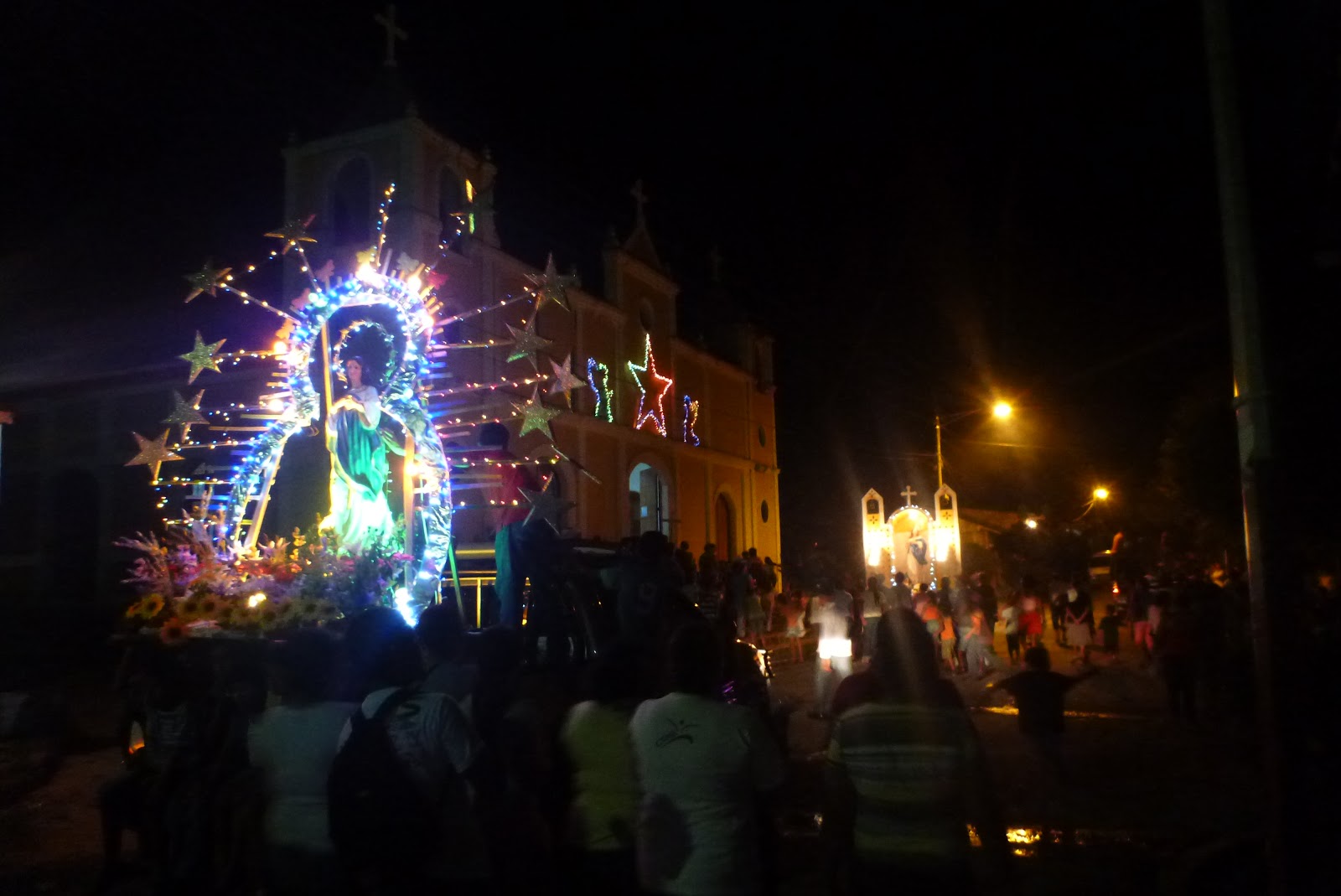
Purisimás

More Purisima (i tried to make a pun)! I neglected to mention in my last post that Purisima means "The Purest One," in reference to Mary because of the Catholic belief that she conceived Jesus through the Holy Spirit.

Here are some photos from the final day of festivities. You can click on the images to enlarge them and see them as a slideshow.

women line up for prayer and Purisima treats

 a soccer field fills up with children waiting for their treats

the faithful fill the streets, on a nighttime procession 


one of the altars up close...wish Mary's image were adapted to be more phenotypically representative 

the procession reaches the church 

 a highly dangerous paper bull with a firecracker coating

fireworks throwing crazy amounts of smoke